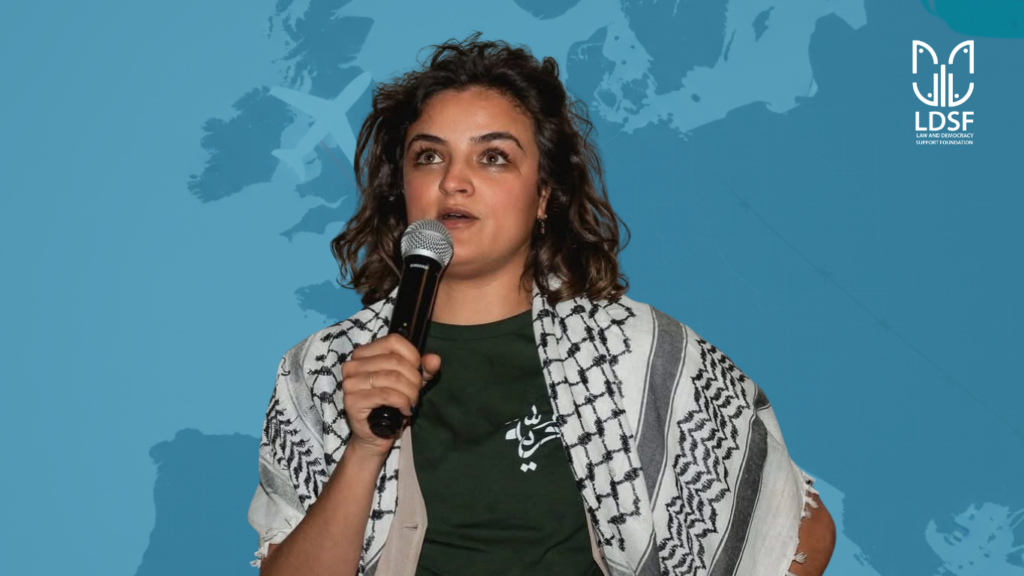
LDSF expresses its strongest condemnation of the arrest of Moroccan activist Zineb El Kharroubi, a resident of France, by security authorities at Marrakesh Menara International Airport on Thursday evening, February 12, immediately upon her arrival. The Foundation considers this measure, which targeted the activist for digital posts published while residing in Paris, a blatant example of “Transnational Repression.”
Targeting El Kharroubi in this manner sends a clear message of intimidation aimed at imposing “transnational self-censorship” and transforming national airports from transit gateways into “security traps” embodying the internationally recognized phenomenon of “Detention upon Entry.” This approach relies on tracking and arresting citizens as soon as they cross national borders based on digital surveillance of their activities abroad. Such measures do not merely target individuals; they aim to terrorize the “diaspora opposition” as a collective to impose security guardianship over them.
This escalation coincides with the emergence of a new political movement led by “Gen Z” in Morocco, a generation that has broken the barrier of fear and created innovative spaces for expression and demands for democratic and human rights reforms. This has prompted authorities to intensify “pre-emptive security strikes” to suppress growing rights awareness and forestall potential movements, whether domestically or through circles of influence abroad.
El Kharroubi’s arrest occurs within a grim human rights landscape in Morocco, characterized by increasing restrictions on freedom of expression and the instrumentalization of the judiciary to settle scores with activists. LDSF, while monitoring with grave concern the preliminary investigation of El Kharroubi—tainted by suspicions of political retaliation—and the seizure of her personal property, reaffirms its steadfast position: Freedom of expression is an inherent, indivisible right that knows no geographical borders. Political dissent, whether from abroad or within, does not, under any circumstances, constitute a “legal crime”; rather, it is a legitimate exercise of the right to opinion guaranteed by international covenants and the Moroccan Constitution.
The Foundation holds the Moroccan authorities fully responsible for the physical and psychological safety of the activist. It demands her immediate and unconditional release, the dismissal of all malicious charges aimed at silencing dissent, and a definitive end to transnational repression policies. Furthermore, the Foundation calls for genuine compliance with international treaties, foremost the International Covenant on Civil and Political Rights (ICCPR), to ensure the protection of activists from any security overreach affecting their inherent right to dissent.