
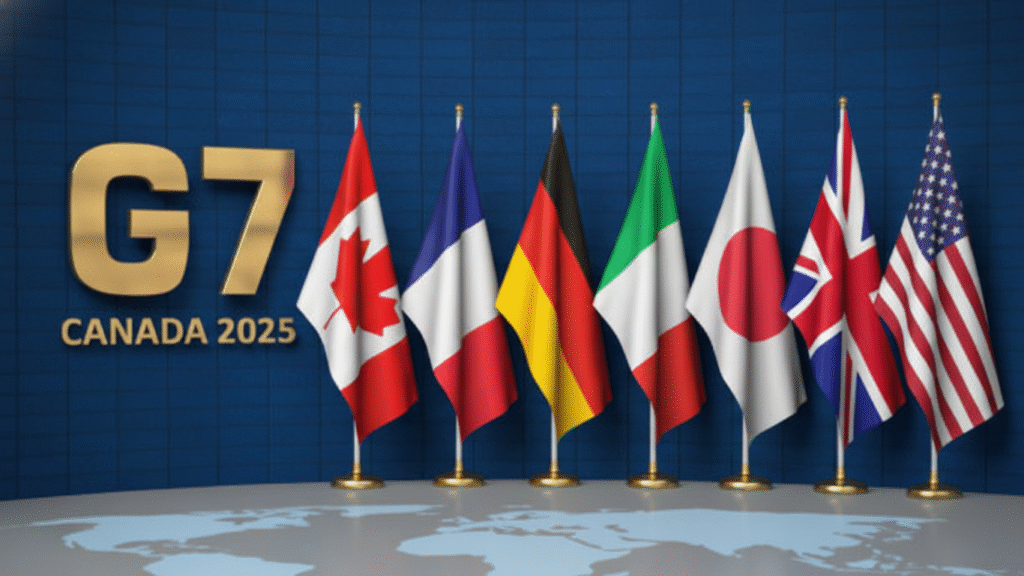
Law and Democracy Support Foundation urges G7 governments to take concrete action ahead of the Interior and Security Ministers’ Conference in Ottawa.
Ahead of the G7 Interior and Security Ministers’ Conference (21–23 November), the Law and Democracy Support Foundation (LDSF) calls on G7 member states and the European Union to take decisive measures against transnational repression, a growing threat to democracy and human rights worldwide.
In June 2025, G7 leaders pledged to develop a coordinated framework to counter transnational repression, including sharing best practices, strengthening legal protections, and launching a digital academy under the Rapid Response Mechanism. However, authoritarian regimes continue to target journalists, activists, and dissidents abroad through intimidation, surveillance, and violence.
This call comes after the European Parliament adopted its first comprehensive report on transnational repression on 13 November, with an overwhelming majority (512 votes to 76), noting that 80% of transnational repression cases are attributable to just ten countries, including China, Türkiye, Tajikistan, Russia, Egypt, Cambodia, Turkmenistan, Uzbekistan, Iran, and Belarus. The report documented more than 1,200 direct physical incidents in 103 countries over the past decade, including targeted killings, abductions, violence, forced returns, misuse of Interpol, and digital surveillance. It also stressed the need to ban the export of spyware and dual-use goods to authoritarian regimes and to impose targeted sanctions under the EU Global Human Rights Sanctions Regime (EU Magnitsky Act).
LDSF co-founded the Civil Coalition Against Transnational Repression in Germany in August 2024, a coalition of twenty diaspora-led organizations. Thanks to sustained advocacy efforts—where LDSF played a pivotal role—the new German government, for the first time, committed in its coalition agreement to address transnational repression and recognize it as a direct threat to human rights and democracy.
In April 2025, the coalition published a policy paper urging the German government to:
- Establish a National Coordination Office on Transnational Repression with a clear mandate to monitor cases, respond effectively, and support victims.
- Create reporting and counseling centers offering legal and psychological assistance to targeted individuals.
- Restrict the use and export of surveillance technologies and advocate for EU-level sanctions against perpetrators.
- Develop legal and diplomatic mechanisms to hold accountable those responsible for cross-border violations.
- Ensure systematic engagement with civil society in shaping and monitoring these policies.
Egyptian authorities continue to target dissidents abroad through a wide range of tools, including misuse of consular services, listing activists on terrorism registers, freezing assets, orchestrating digital smear campaigns, blocking exiled independent media, deploying spyware against journalists, and threatening families inside Egypt—alongside judicial harassment and direct physical assaults. These violations have been documented by LDSF as well as European and UN reports, underscoring that such practices not only endanger individuals but also undermine global civic space. LDSF calls on G7 governments to guarantee special protection for exiled defenders residing in their territories and to hold perpetrators accountable through international sanctions and diplomatic pressure.
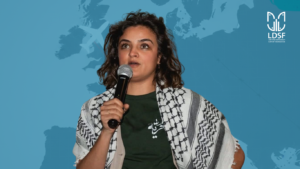
Basma Mostafa, Programs Director at LDSF, stated:“Transnational repression is not an isolated violation; it is a systematic attack on global democracy. When free voices are targeted beyond borders, the message is clear: there is no safe haven for human rights defenders. The G7 must lead by example and move beyond statements to concrete action. Failure to act will embolden authoritarian regimes to expand these practices—especially in the digital sphere, which has become their most dangerous weapon. At LDSF, we believe that protecting exiled defenders is the first line of defense for the values on which democracies are built. Civil society engagement in policy-making is not optional; it is essential for effective measures.”
LDSF urges G7 governments to:
- Operationalize the June commitments by establishing a joint monitoring and response mechanism.
- Guarantee safe environments for exiled human rights defenders and journalists, including legal and diplomatic protections.
- Ensure accountability through targeted sanctions and international pressure.
- Combat digital repression by restricting spyware exports and supporting secure technologies for civil society.
- Engage civil society systematically in shaping and monitoring these measures.
Oh, the LDSD, tirelessly battling digital dragons and diplomatic darkness! Their calls for spyware curbs and safe havens for exiled activists sound like a digital shield wall against the authoritarian internet bullies. While the G7 nods in agreement (probably after checking their own spyware contracts), one cant help but wonder if the real magic happens when activists finally get their tech support tickets answered. And those Egyptian authorities? Playing checkers abroad while the world watches the digital game of thrones. Lets hope the G7s commitments dont end up like last years resolution – a noble start, but forgotten by March. Onward, defenders, and may your Wi-Fi stay strong!