Law and Democracy Support Foundation (LDSF) has submitted a detailed contribution to the UN Special Rapporteur on the promotion and protection of the right to freedom of opinion and expression, as part of the call for input regarding the state of freedom of expression in Germany.
The submission highlights the widening gap between Germany’s robust constitutional guarantees and the lived reality of journalists, human rights defenders, and exiled communities affected by Transnational Repression (TNR).
LDSF emphasizes that the German government’s political recognition of this phenomenon in May 2025 has yet to translate into effective protection measures or clear operational mechanisms, despite its escalating and stifling impact on freedom of expression within the country.
The submission illustrates how TNR undermines individuals’ ability to participate in public life through a wide range of practices. These include direct digital targeting such as hacking and surveillance, coordinated reporting campaigns to deplatform voices, and physical intimidation through stalking and harassment during public events. LDSF also documented “coercion by proxy” through the targeting of families in their home countries to silence dissidents in Germany, as well as gender-based smear campaigns involving sexualized threats against female journalists and defenders. Furthermore, the report notes the use of consular and administrative pressure such as withholding essential identity documents and the adoption of tactics that fall “below the criminal threshold.” These tactics often evade prosecution due to a lack of institutional awareness among authorities, necessitating a response that goes beyond traditional criminal frameworks.
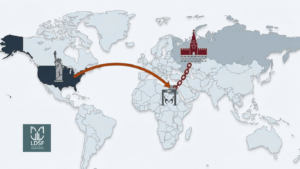
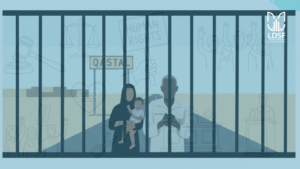
The contribution identifies the Egyptian authorities’ systematic practices as a primary model of transnational repression (TNR). LDSF documented a “catalogue” of tactics targeting dissidents abroad, including: proxy intimidation and family reprisals to coerce defenders into silence; the weaponization of courts, terrorism listings, and in absentia sentences to create deportation risks; the misuse of consular services to deny essential identification documents; and gendered defamation involving sexualized threats against women defenders. These tactics extend to targeting independent exile media through digital surveillance, spyware, content blocking, and coordinated reporting , as well as utilizing regional security coordination for harassment or deportation.
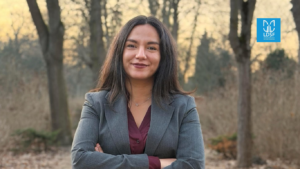
In this context, the report highlights the case of defender Basma Mostafa, in her capacity as the Director of Programmes at LDSF, which was documented by UN mandates (AL EGY 6/2024) and formally recognized by the German Federal Foreign Office as a clear case of targeting. LDSF monitored renewed threats against her in 2025 by the same network, including abduction threats, coordinated smear campaigns, and direct messages vowing “punishment”. This situation reflects a profound failure in the protection and accountability framework, as official political recognition has not deterred perpetrators, leaving targets in a continuous struggle against impunity.
LDSF asserts that the fragmented institutional response in Germany including the absence of a national coordination office and a lack of specialized training has created an environment where TNR flourishes with minimal accountability, granting perpetrators a sense of impunity on German soil. Moreover, the lack of centralized, multilingual reporting channels serves as a fundamental barrier, depriving targeted individuals from exiled and marginalized communities of effective access to justice and legal remedies. This, in turn, discourages reporting and erodes trust in law enforcement agencies and the national protection framework.
Accordingly, LDSF calls on the German authorities to:
- Establish a National Office to Combat Transnational Repression: Reporting directly to the Federal Chancellery (Bundeskanzleramt) to ensure binding coordination between sovereign ministries (Interior, Foreign Affairs, and Justice) and federal and state authorities.
- Develop Centralized, Multilingual, and Gender-Sensitive Reporting Channels: To ensure all affected individuals can report in their native languages while receiving immediate legal, digital, and psychological support.
- Implement Systematic Training for Frontline Entities: Including the police, prosecutors, judges, and asylum and migration authorities, on modern TNR patterns and tactics that fall “below the criminal threshold.”
- Strengthen Digital Protection and Tech Accountability: By establishing rapid digital forensic response units and imposing a ban on the export of spyware, as part of Germany’s moral and legal responsibility to prevent repressive regimes from obtaining tools to target dissidents abroad.
- Activate External Accountability Mechanisms: Utilizing the EU Global Human Rights Sanctions Regime (Magnitsky-style) against perpetrators, ensuring no impunity under European commitments, and preventing the abuse of international cooperation, particularly via INTERPOL or extradition procedures.
LDSF emphasizes that these demands align with the established jurisprudence of the Special Rapporteur’s mandate. This includes the 2019 report by former Rapporteur David Kaye on digital surveillance, and the 2024 report by current Rapporteur Irene Khan, which warned that TNR poses an existential threat to freedom of expression in exile and affirmed the “positive obligations” of host states to take proactive measures to protect residents within their jurisdiction.
In conclusion, LDSF stresses that adopting these measures is the true litmus test for the rule of law in the face of transnational threats. The German government must realize that political recognition is not an end in itself. Under international law, the state bears a “Due Diligence” obligation; the absence of effective protection mechanisms makes Germany, over time, an objective partner in enabling such repression through inaction. This failure not only infringes upon freedom of expression (Article 5 of the Basic Law) but also violates the right to physical integrity and personal freedom (Article 2(2)). It fundamentally contradicts the state’s obligation to respect and protect human dignity (Article 1) against any threat, including those that cross borders.
To read the full submission to the UN mechanisms,