Joint Statement
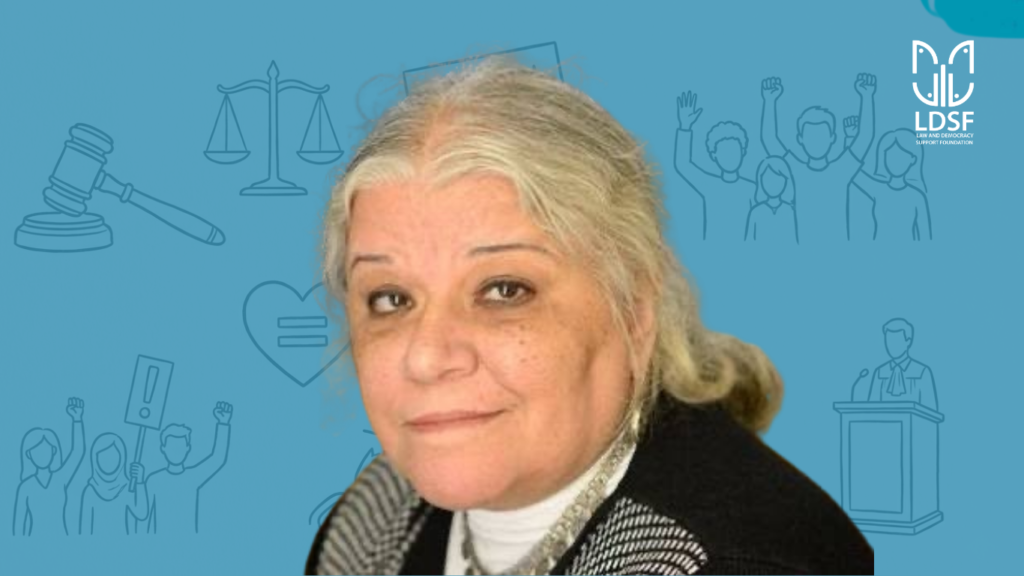
The signatories consider the summoning of Dr. Aida Seif al-Dawla, a co-founder of the El Nadeem Center, two weeks after the arrest of Ahmed Douma and his release on bail, to be “a new practice in a systematic security policy aimed at hollowing out human rights and political work”
The organizations condemn the expansion of “financial drain” measures against politicians and human rights defenders through releasing them on high financial bail instead of personal guarantees.
The pattern of investigation followed by release on bail has been repeated with Ammar Ali Hassan, Hossam Bahgat, Ahmed Douma, Mahienour El-Massry, and Lina Attalah, making it closer to a “systematic procedure”.
The undersigned human rights organizations condemn the ongoing escalation in summoning human rights, political, and journalistic figures for investigation before the Supreme State Security Prosecution, in a context in which these summonses are viewed as a deliberate tool to silence independent voices and intimidate those working in the public sphere. The summoning of Dr. Aida Seif al-Dawla, a co-founder of the El Nadeem Center for the Rehabilitation of Victims of Violence and Torture, for investigation before the SSSP no longer limited to individual cases but has come to represent a systematic policy aimed at emptying human rights and political work of its substance and imposing indirect restrictions on freedom of opinion and expression, especially as the summon comes two weeks after the arrest of political activist Ahmed Douma, his interrogation, and his subsequent release on financial bail.
Dr. Aida Seif al-Dawla received a summons for investigation from the Dokki Prosecution to appear before the Supreme State Security Prosecution on Sunday, 15 February 2026, in connection with Case No. 809 of 2026. The summons did not include any information regarding the charges brought against her or the details of the case itself.
In this context, the undersigned human rights organizations denounce the continued escalation of a new security practice that has become increasingly frequent over the past year. This practice involves arresting politicians, journalists, human rights defenders, and public figures, interrogating them before the SSSP over vague and repetitive charges, and then concluding the investigations with decisions of “release” on high financial bail. The undersigned organizations view this practice as a new form of indirect punishment and financial drain, a dangerous expansion in targeting freedom of opinion and expression in Egypt, and a message of intimidation to anyone attempting to exercise their legal and constitutional right to express their views.
Over the past months, many public figures, journalists, human rights defenders, and politicians have been arrested or summoned, then interrogated on charges of “spreading false news,” “misuse of social media,” and “financing terrorist groups”, the repetitive charges brought by the SSSP against all those investigated before it. In many cases, these investigations end after long hours of questioning with decisions of release, but only in exchange for high financial bail.
Cases of “investigation and release on bail” have been repeated over the past months, most recently in the case of political activist Ahmed Douma, after security forces arrested him and the prosecution interrogated him on charges of “spreading false news,” before deciding to release him on a bail of EGP 100,000. This is not the first time this pattern has been used against Douma; however, this incident marked an escalation in the manner of dealing with him, as he was arrested from his home at dawn, detained for long hours before interrogation, and had personal belongings and books confiscated from his home.
This pattern also includes journalist Lina Attalah, Editor-in-Chief of Mada Masr, who was interrogated by the prosecution over a journalistic report on detention conditions in prisons and was ultimately released on a bail of EGP 30,000 in August 2025. It also includes human rights defender Hossam Bahgat, who was interrogated before the SSSP in January 2025 and then released on a bail of EGP 20,000 after hours of questioning. Most recently, it includes prominent writer and political figure Ammar Ali Hassan, who was summoned by the Supreme State Security Prosecution in December 2025 and interrogated for long hours over posts on his personal Facebook account, before being released on a bail of EGP 20,000.
The cases also included human rights lawyer and political activist Mahienour El-Massry, who was interrogated by the SSSP in August 2025 in Case No. 6322 of 2025 on the same charges and was ultimately released on a bail of EGP 50,000 pending the case.
Bail is, in principle, an exceptional legal measure intended to ensure a defendant’s appearance at investigation or trial sessions, and it should not be transformed into a means of punishment or deterrence. However, what Egypt has witnessed recently reveals an increasing use of high financial bail, as a means of financially and morally exhausting those targeted and imposing a direct cost on the exercise of the right to expression or journalistic or human rights work. The undersigned organizations note that the repetition of these incidents, the similarity of charges, and their frequent conclusion with release in exchange for financial bail confirms that this is no longer a series of individual cases, but rather a systematic policy to suppress the public sphere by burdening individuals with massive financial costs.
In this context, the undersigned organizations affirm that their criticism of the expansion in the use of bail is inseparable from the principle of the presumption of innocence. Although bail is presented in official discourse as an alternative guarantee to pretrial detention, in practice it is transformed into a punitive measure, particularly given the difficulty of recovering its value in cases of acquittal or dismissal of investigations. Imposing high financial bail in the context of investigations that often end without referral to trial constitutes an unjustified financial burden, empties the presumption of innocence of its substance, and turns precautionary measures into tools for restricting freedom and punishing individuals for exercising their legitimate right to expression and public engagement, rather than serving as exceptional legal guarantees used within the narrowest limits.
The undersigned organizations further affirm that this measure cannot be separated from a broader context of repression of the public sphere, where decisions of “release” appear, on the surface, as mitigation, but constitute a new form of codified punishment. The organizations believe that this approach represents a dangerous shift in the tools of repression, as targeting is no longer limited to prolonged detention, but has taken the form of “financial punishment” that exhausts individuals and organizations, creates a climate of fear and self-censorship, and undermines the constitutional right to expression and political and journalistic work.
The organizations call for an end to the use of vague and repetitive charges as a tool to pursue journalists, politicians, and human rights defenders; an end to the expansion in imposing high bail as an indirect form of punishment; respect for constitutional guarantees that protect freedom of opinion and expression and prohibit imprisonment in publication cases; and an end to the pattern of repeated summonses and investigations that empties the right to liberty of its substance and turns legal procedures into security tools.
Signatories:
The Egyptian Commission for Rights and Freedoms
El-Nadeem Center
Law and Democracy Support Foundation
Refugees Platform in Egypt (RPE)
Egyptian Initiative for Personal Rights
Committee for Justice
Sinai Foundation for Human Rights
EgyptWide for Human Rights
Freedom of Thought and Expression Foundation for Human Rights
Cairo Institute for Human Rights Studies
Egyptian Front for Human Rights
Egyptian Human Rights Forum
HuMENA For Human Rights and Civic Engagement
Regional Center for Rights & liberties
Centre for Egyptian Women Legal Assistance
Masaar – Technology and Law Community
World Organization Against Torture (OMCT), within the framework of the Observatory for the Protection of Human Rights Defenders
International Federation for Human Rights (FIDH), within the framework of the Observatory for the Protection of Human Rights Defenders