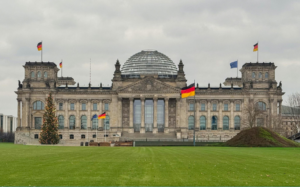
Photo by Igor Passchier from Pexels
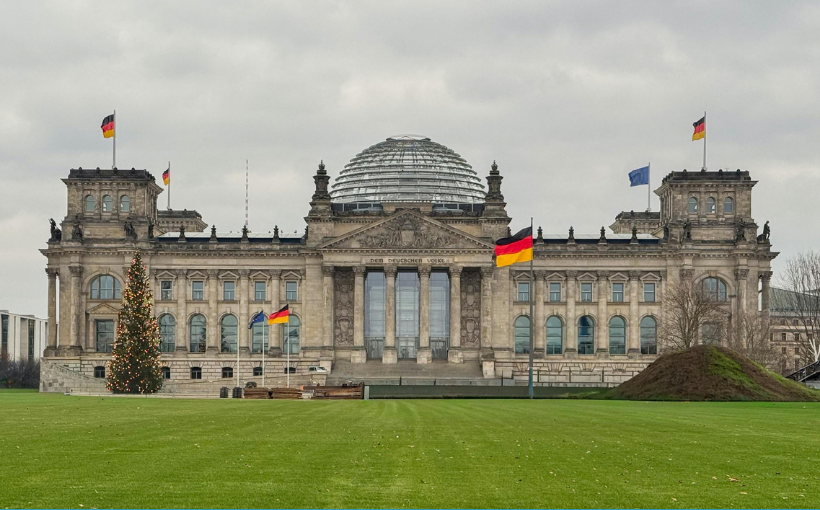
Law and Democracy Support Foundation (LDSF) welcomes the extensive Minor Interpellation submitted by several members of the Alliance 90/The Greens parliamentary group in the German Bundestag to the Federal Government, entitled: “Transnational Repression in Germany – Measures to Protect Democracy and Targeted Individuals.”
This Minor Interpellation represents an important institutional development in recognizing transnational repression as a systematic threat that targets not only individuals, but also the sovereignty of democratic states. It undermines the fundamental rights of journalists, political opponents, and human rights defenders residing in Germany. The interpellation highlights the escalating practices of transnational repression carried out by authoritarian states, including Egypt, Iran, Turkey, Russia, China, and Vietnam. These practices encompass a wide range of violations, such as threats, surveillance, cyberattacks, defamation campaigns, blackmail, pressure on family members in countries of origin, and the misuse of legal and diplomatic mechanisms to silence independent voices in exile. It further underscores that such practices erode the rights to freedom of expression, assembly, and political participation, and create a climate of fear within exile communities.
As a founding member of the Coalition Against Transnational Repression in Germany, Law and Democracy Support Foundation welcomes this significant parliamentary step, noting that a large number of the questions and demands raised in the Minor Interpellation directly reflect the coalition’s core recommendations outlined in its policy paper. In particular, these include the need to establish systematic mechanisms for documenting cases of transnational repression, to develop clear and effective protection pathways for victims, and to strengthen government coordination across relevant ministries and authorities.
The Foundation further notes that the Minor Interpellation includes 51 detailed questions calling on the German Federal Government to clarify the protection mechanisms currently available for individuals targeted by transnational repression, establish a national system for documenting such cases, and enhance coordination among the Ministries of the Interior, Foreign Affairs, and Justice, as well as security authorities. It also calls for expanding legal and psychosocial support, developing specialized training programs for police and immigration authorities, and strengthening structured cooperation with civil society organizations, including the civil coalition combating transnational repression.
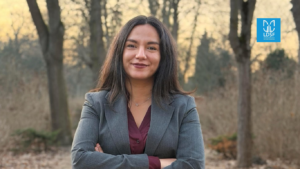
The Foundation also highlights that the Minor Interpellation contains a direct question concerning the case of human rights defender and LDSF Program Director, Basma Mostafa. In question no. (35), Green Party MPs request that the Federal Government clarify the measures taken to protect her and assess their effectiveness. This follows the documentation of her case through relevant United Nations mechanisms and its recognition as a clear example of transnational repression—prompting the German Government to issue its first-ever public condemnation of a specific case of transnational repression. This development underscores the need for clear governmental accountability regarding the measures taken.
The Foundation emphasizes that the transnational repression addressed in the Minor Interpellation cannot be separated from the domestic context in Egypt, where Egyptian civil society has for years been subjected to a systematic crackdown aimed at dismantling any independent human rights activity. This has occurred through arbitrary arrests, prolonged pretrial detention, the use of investigations and trials as tools of punishment and deterrence, the erosion of judicial independence, and the expansion of exceptional legislation that criminalizes public engagement. This legal and security framework—particularly Law No. 149 of 2019 on the Regulation of Civil Society and broadly worded counterterrorism legislation—has created an environment in which any human rights activity is vulnerable to criminal prosecution.
Egyptian authorities employ multiple forms of transnational repression, including pressure on family members inside Egypt, politically motivated criminal prosecutions and in absentia convictions, placement on terrorism designation lists, deprivation of official documents and consular services, as well as defamation and incitement campaigns, surveillance, espionage, and the misuse of diplomatic missions for intimidation and threats. These practices have been documented by the Law and Democracy Support Foundation in reports submitted to United Nations mechanisms during Egypt’s fourth Universal Periodic Review before the Human Rights Council, as well as in formal communications with the UN Working Group on Enforced or Involuntary Disappearances.
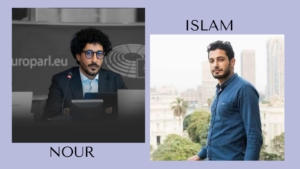
The escalation of these practices has become particularly evident, as reflected in the Egyptian Network for Human Rights’ announcement on 26 March 2026 of the forced suspension of its human rights activities after years of documenting grave violations, most notably enforced disappearances and arbitrary detention. This was preceded by the attempted arrest of Islam Khalil, brother of human rights defender Nour Khalil, Executive Director of the Refugees Platform in Egypt, following the siege of the family home and threats against its members—constituting a clear example of proxy punishment against the families of human rights defenders. In the same context, the Sinai Foundation for Human Rights and its Executive Director, Ahmed Salem, have been subjected to coordinated defamation campaigns and direct and indirect threats, including media incitement and threats of forcible return to Egypt should he continue his human rights work from abroad.
The Foundation concludes that these policies effectively transform exile itself into an extension of the repressive environment inside Egypt, rather than a space of safety for human rights defenders. This results in a persistent state of insecurity and persecution that affects not only the targeted individuals, but also their families and personal stability.
The Foundation stresses that effective protection for human rights defenders in exile requires a comprehensive and coordinated governmental response grounded in systematic documentation, accountability, and ensuring that perpetrators of such violations do not enjoy impunity. The Foundation reaffirms its commitment to working with parliamentary and governmental bodies, as well as with civil society organizations, to ensure that Germany—and Europe more broadly—remains a safe space for those forced to flee repression, and that its territory does not become a stage for the continuation of violations committed in their countries of origin.