
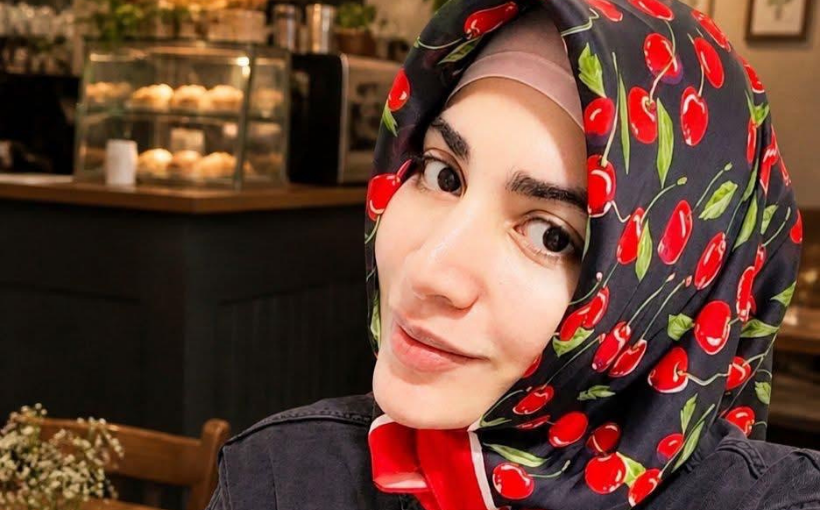
Law and Democracy Support Foundation expresses its grave concern regarding the detention of Egyptian opposition activist Mariam Mohamed El‑Sayed Abdelbasette, aged 31, who has been legally residing in the Sultanate of Oman since 2021.
Her detention took place shortly after she gave birth on 25 May 2026 at the Military Medical City hospital, where she was registered as a “prisoner” and effectively deprived of her liberty within a medical facility, without any publicly disclosed legal basis for such a measure.
This constitutes a serious violation of her fundamental rights, particularly in light of the documented circumstances of her case. Mariam is a mother of two minor children, aged six and four, and was in the eighth month of pregnancy at the time these events began.
The events commenced on 26 March 2026 with the arrest of her husband, Ahmed Moussa, aged 38, in Oman by a security authority after being summoned from his workplace. He was detained in a civilian prison without being notified of any judicial decision or granted the right to challenge the legality of his detention, and was permitted only one visit.
On 9 April 2026, he was informed that he would be released; however, his family was subsequently shocked to receive a phone call from him at Muscat Airport informing them that he was being forcibly deported to Egypt. He was then deported to Cairo based solely on a verbal notification of an alleged INTERPOL request, without the provision of any written decision, judicial order, or official documentation to him or his family.
The Foundation considers that these circumstances constitute a case of forced deportation carried out outside legal frameworks and due process guarantees, as he was transferred without legal safeguards or the possibility to challenge the measure, in violation of relevant international standards.
Since his deportation, his whereabouts have remained unknown and no information has been disclosed regarding his place of detention or legal status. This situation amounts to an enforced disappearance and raises serious concerns about his physical and psychological integrity.
His family has submitted a formal complaint to the Public Prosecutor in Egypt registered under No. (953 of 2026, Suez Administrative) requesting disclosure of his whereabouts and legal status or his immediate release; however, no response has been received to date.
It should be noted that Ahmed Moussa had previously been charged in Case No. 148 of 2014 (Suez Criminal Court) in connection with allegations related to unlawful assembly. He served the full term of the sentence imposed on him and was released in March 2017. He subsequently left the country through legal channels, without being subject to any outstanding judicial measures or legal proceedings. These circumstances raise serious concerns regarding the legal basis for any subsequent measures taken against him.
On 15 April 2026, Mariam was prevented from traveling from Muscat Airport to leave Oman and was verbally informed by Omani officials that she was subject to a travel ban due to being listed on INTERPOL databases, without the provision of any official document or judicial order. She was subsequently subjected to two interrogations on 15 and 16 April without legal counsel, during which she was informed that she could be deported to Egypt if she left Oman. This effectively imposed restrictions on her freedom of movement without any legal basis.
Mariam further confirmed that she had not been formally notified of any charges or legal proceedings, and that her only knowledge of the case came from images she obtained, which the Foundation reviewed and verified. These documents indicated her inclusion as a defendant in Case No. 1871 of 2026, alongside State Security-related cases, with broadly worded charges such as “leading a terrorist organization,” “spreading false news,” “unlawful assembly,” and “incitement to civil disobedience,” without specifying any individual criminal acts attributable to her, reflecting a pattern that Egyptian authorities have consistently employed in recent years, both domestically and transnationally, to criminalize peaceful public engagement and target political opponents, human rights defenders, journalists, and individuals expressing dissenting views.
The charges against Mariam Abdelbasette are directly linked to her peaceful online activity, which began after she relocated to the Sultanate of Oman. Her activities were limited to the use of social media platforms through commenting, sharing content, and contributing to the administration of opposition-oriented digital pages that advocate for political change through peaceful means, including public debate and digital campaigns.
This activity also included supporting online initiatives, notably an online public referendum calling for political change, including the removal of President Abdel Fattah el‑Sisi. This digital referendum attracted significant engagement on social media, despite attempts to restrict access to it.
These pages have been subjected to a series of repressive measures, including attempts to block their platforms within Egypt, restrict access to them, and repeatedly take down their social media pages. Individuals associated with these platforms have also been targeted, including through prosecution in broad security-related cases in absentia and their inclusion on terrorism lists. These actions reflect broader practices of transnational repression involving the use of legal and security tools to pursue opponents beyond national borders.
Mariam has not engaged in or advocated for violence or any criminal conduct. Her activities were strictly limited to the peaceful expression of opinions and participation in public debate in digital spaces. Nevertheless, she has continued to be targeted, in what appears to be an effort to punish her for her peaceful activity and to intimidate Egyptian activists abroad and deter them from engaging in public life.
In parallel, Mariam has been subjected to a pattern of serious and organized threats through a closed Telegram group named “Anubis191919” a reference to Anubis, the ancient Egyptian god of death and mummification, which may carry symbolic connotations related to death or intimidation, used to publish personal data and images of Egyptian dissidents abroad, as part of what appears to be a coordinated campaign of harassment and targeting. Law and Democracy Support Foundation has directly reviewed the content of this group and has documented a number of these messages, including explicit threats, repeated references to the publication of harmful content or “episodes” targeting individuals, as well as suggestions of possible harm or exposure. These materials further reveal a pattern of systematic tracking of targeted individuals, alongside the publication of their personal data and images.
The content of these threats also includes gendered defamatory language, through the use of degrading and abusive expressions targeting women in particular. This reflects an additional dimension of gender-based violence against women engaged in public life. Taken together, this rhetoric, combined with direct threats, demonstrates a concerning level of organized incitement and significantly heightens fears for Mariam’s life, physical safety, and the safety of her family members.
Through her international lawyer, Ben Keith, Mariam submitted a complaint to the Commission for the Control of INTERPOL’s Files (CCF) on 5 May 2026, seeking to challenge the misuse of INTERPOL mechanisms in this case, who stated: “Mariam’s case bears every hallmark of transnational repression. She has been detained shortly after giving birth, held alongside her newborn, and denied any meaningful explanation of the legal basis for her treatment. The verbal invocation of an INTERPOL listing, with no written notification and no opportunity to challenge it, falls well below the standards required by INTERPOL’s own rules and by international law. Her husband was removed to Egypt in precisely this way, and the risk that Mariam will follow is real and immediate. At the very least, any transfer must proceed through formal extradition proceedings, with disclosure of the allegations, judicial scrutiny, and the opportunity to raise the political offence exception and the risk of persecution. To remove her by informal means, on the strength of an undisclosed INTERPOL listing, would be a grave breach of international law and place her at serious risk. Oman’s non-refoulement obligations are absolute and cannot be displaced by an INTERPOL request communicated orally.”
The situation of Mariam should also be viewed within a broader context of targeting affecting her family members. Her father is currently living in exile following the issuance of an in absentia life sentence against him in Egypt. Meanwhile, her brother has been held in prolonged pre-trial detention since 2019 in connection with the 20 September 2019 protests, without trial, under conditions that undermine fair trial guarantees. Members of her family have also been subjected to indirect threats in relation to her activities.
This extended targeting of family members constitutes a form of proxy punishment, whereby the family is used as a means of exerting pressure on Mariam due to her activities. This significantly heightens the gravity of her situation and reinforces the risk that she may be subjected to serious violations if returned to Egypt.
The Foundation considers Mariam’s detention shortly after childbirth, alongside her newborn, and in the absence of any declared legal basis or transparent judicial procedures, to constitute arbitrary detention and a serious violation of her fundamental rights. It further exposes her to the risk of refoulement to Egypt, particularly in light of her husband’s enforced disappearance and the existence of documented threats to her safety, in violation of established principles of international law, including protections afforded to mothers, the rights of the child, and the prohibition of refoulement.
In light of these facts, the Foundation emphasizes that the case raises serious concerns regarding the use of deportation procedures and international security cooperation mechanisms, including INTERPOL, in contexts of a political nature and their potential misuse to pursue and suppress dissenting voices abroad.
The Foundation calls upon the Omani authorities to refrain from any action that could result in the deportation of a mother who has just given birth, is responsible for two minor children, and is in a particularly vulnerable situation, and to ensure her protection and full respect for her rights in accordance with Oman’s international obligations.
Law and Democracy Support Foundation further calls for:
- The immediate and unconditional release of Mariam Abdel Baset, in line with Oman’s obligations under international human rights law.
- Granting her the freedom of movement, the right to choose her place of residence, and the ability to travel to any destination she wishes without restrictions.
- The immediate disclosure of the legal basis for any measures taken against her, ensuring prompt access to legal counsel and full guarantees of a fair trial, and the suspension of any procedures that may lead to her forcible return to Egypt.
- The opening of an independent and transparent investigation into the circumstances of her detention, as well as the forced transfer and potential enforced disappearance of her husband. The Foundation also calls on the Omani authorities to review any cooperation related to INTERPOL requests and to ensure that INTERPOL mechanisms are not misused in this case.
LDSF further urges INTERPOL and the Commission for the Control of INTERPOL’s Files (CCF) to urgently review the case and take appropriate measures to suspend or delete any notices or data that may violate the organization’s rules.
LDSF calls on the international community and relevant United Nations mechanisms, in particular the Special Rapporteur on Arbitrary Detention and the Special Rapporteur on Enforced Disappearance and torture, as well as diplomatic missions and the European Union, to urgently intervene and raise this case with the Omani authorities, and to take effective diplomatic measures to ensure the protection of Mariam and her child, prevent her refoulement, and guarantee respect for Oman’s international obligations. The Foundation emphasizes that the violations she is facing represent a serious and growing pattern of transnational repression aimed at restricting freedoms and targeting peaceful political activity beyond national borders.
LDSF also calls upon the Egyptian authorities to cease their systematic repression of freedom of expression, the ongoing closure of civic space, and the continued practice of transnational repression.
Further Updates on the Case:



3 thoughts on “Egypt’s Misuse of INTERPOL as a Tool of Transnational Repression: Detention of Egyptian Opposition Activist in Oman Raises Fears of Forced Return”