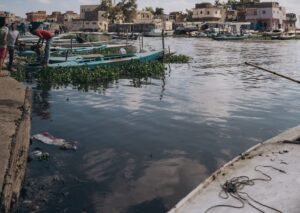
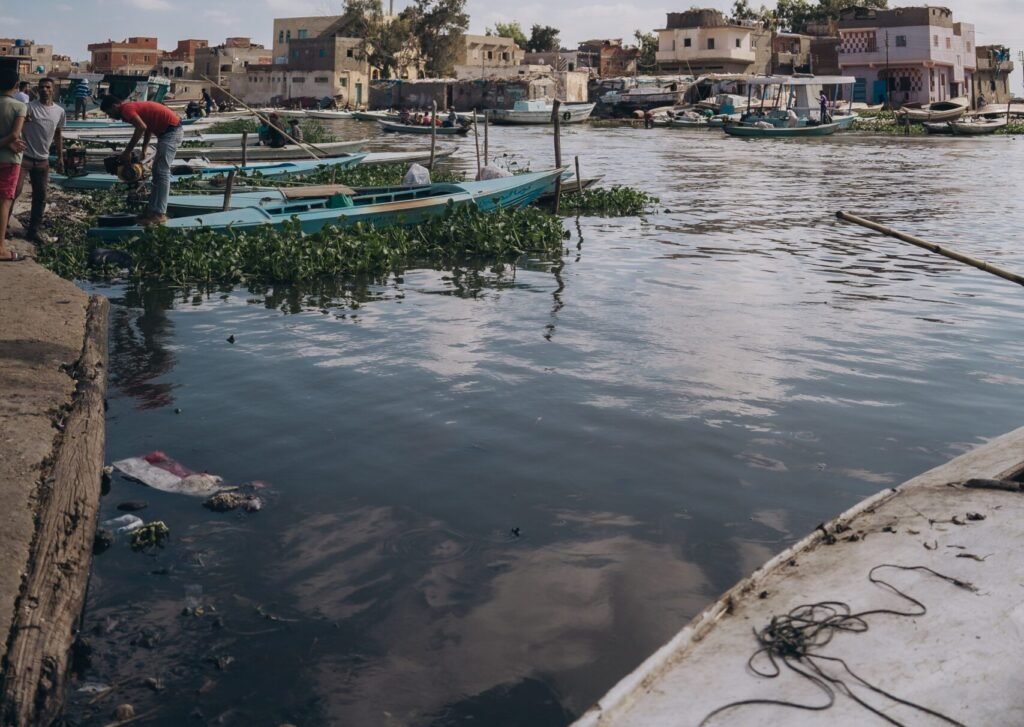
Photo By Eslam Mohammed Abdelmaksoud Via Pexels
The undersigned organizations welcome the report of the United Nations Special Rapporteur on the human rights to safe drinking water and sanitation following his official visit to Egypt from 7 to 18 February 2026.
The organizations consider the report an important assessment of the challenges affecting the realization of the human rights to safe drinking water and sanitation in Egypt. While acknowledging progress made in expanding access to water and sanitation services, including through the Hayah Kareema Presidential Initiative, the report identifies serious and persistent concerns relating to inequality, water quality, transparency, public participation, accountability, and access to services for populations living in vulnerable situations.
The Special Rapporteur’s findings are consistent with concerns documented by independent Egyptian and international human rights organizations in recent years. In January 2026, CFJ, ECRF and CIHRS submitted a joint contribution in response to the Special Rapporteur’s call for input ahead of his country visit, highlighting restrictions on civil society, inequalities in access to water and sanitation, barriers to environmental information and public participation, and the risk of reprisals against human rights defenders and affected communities engaging on these issues.
Of particular concern, the Special Rapporteur reported serious difficulties in meeting researchers, social actors and human rights defenders during his visit because of their fear of severe reprisals. As a result, important testimonies and contributions had to be received online rather than through meetings inside Egypt. This finding underscores the direct impact of restrictions on civic space on the ability of affected communities and civil society to participate meaningfully in environmental governance and to cooperate safely with United Nations human rights mechanisms.
The report also raises significant concerns regarding transparency and access to information. The Special Rapporteur noted that the results of millions of water-quality analyses conducted annually are not publicly available, including on grounds of “national security”. He further highlighted the involvement of security institutions in decision-making concerning major water projects under national security considerations, as well as legal provisions that may restrict public discussion and criticism concerning water quality.
The organizations also welcome the report’s attention to the situation of persons deprived of liberty. Information received by the Special Rapporteur indicated that water in some detention facilities may be contaminated or inadequately chlorinated, that access to bottled water can be severely restricted, and that some facilities experience chronic sewage-system blockages. The report accordingly calls on Egypt to ensure that all persons deprived of liberty have access to safe drinking water and adequate sanitation.
The Special Rapporteur further highlighted inequalities affecting refugees, asylum-seekers, migrants, rural communities and residents of impoverished informal settlements. Many refugees and others who have fled armed conflicts live in densely populated and underserved areas where adequate water and sanitation services may not be guaranteed. Access to these essential services must be ensured without discrimination, including on the basis of nationality or migration status.
We call on the Egyptian authorities to implement the Special Rapporteur’s recommendations fully and transparently. In particular, the authorities should guarantee safe and meaningful participation by civil society and affected communities; ensure that no person faces reprisals for cooperating with United Nations mechanisms; publish accessible and disaggregated water-quality and sanitation data; ensure effective civilian oversight and public accountability in water governance; guarantee safe drinking water and sanitation in all places of detention; and ensure equitable access to services for refugees, migrants and marginalized communities.
The organizations also urge the Egyptian authorities to regard the Special Rapporteur’s visit as an opportunity for sustained engagement with the United Nations Special Procedures and independent civil society. Meaningful follow-up to the report should include measurable steps toward implementing its recommendations and ensuring that individuals and organizations can contribute to this process safely and without fear of retaliation.
Signatories:
- Committee for Justice (CFJ)
- Egyptian Commission for Rights and Freedoms (ECRF)
- Cairo Institute for Human Rights Studies (CIHRS)
- Egyptian Front for Human Rights (EFHR)
- Law and Democracy Support Foundation (LDSF)