
Law and Democracy Support Foundation (LDSF) has documented the role of the Egyptian Youth Union Abroad in acts of transnational repression, following the Dutch authorities’ decision to expand their investigation into Egyptian proxy Ahmed Naser to include allegations of acting on behalf of a foreign state.

Law and Democracy Support Foundation (LDSF) is closely monitoring the announcement by the Dutch authorities regarding the arrest of a 34-year-old Egyptian national on 27 October 2026 on suspicion of providing services to a foreign power. Dutch media reports identified the suspect as Ahmed Naser, Vice President of the Egyptian Youth Union Abroad.
According to the Dutch authorities, the new investigation being conducted by the National Investigations and Interventions Unit (LO) concerns a number of incidents that took place during 2025 and 2026. Preliminary findings indicate that the suspect is alleged to have been involved in acts of intimidation and threats during several public gatherings and demonstrations, including events held outside the Egyptian Embassy.
Authorities further stated that the new allegations relate to activities carried out on behalf of a foreign power, conduct criminalized under Article 98d of the Dutch Criminal Code, which was introduced as part of the Netherlands’ legislative framework aimed at addressing foreign interference and related activities.
The authorities further noted that the suspect had already been detained in connection with a separate investigation overseen by the Amsterdam Public Prosecution Service, involving allegations of premeditated assault and violent theft. On 26 October 2026, the Amsterdam District Court’s advisory chamber ordered the continuation of his detention for a further 30 days in that case.
The separate investigation concerning suspicions of acting on behalf of a foreign power is being conducted under the supervision of the Dutch National Public Prosecution Service. Authorities stated that the suspect is being held under a regime of “full restrictions,” permitting communication only with his legal counsel.
On 30 October 2026, the suspect appeared before a Dutch examining magistrate, who ordered the extension of his detention for an additional 15 days pending the ongoing investigation into the allegations of acting on behalf of a foreign power, according to Dutch media reports.
This case comes amid a notable shift in the Dutch authorities’ approach to addressing the risks posed by transnational repression and foreign interference within diaspora communities. In recent years, Dutch authorities have repeatedly warned of activities carried out by foreign states or actors affiliated with them aimed at monitoring, intimidating, or silencing dissidents, activists, and journalists residing in the Netherlands. The Dutch government has also developed policies to address what it describes as “undesirable foreign interference” and has considered such practices a threat to democratic security and the rule of law.
In this context, legislative amendments entered into force in 2025, including Article 98d of the Dutch Criminal Code, which aims to enable authorities to investigate and prosecute activities carried out on behalf of foreign powers when such conduct affects the fundamental interests of the state or the rights and freedoms protected under Dutch law. Accordingly, the ongoing investigation reflects a broader Dutch effort to address cross-border activities that may affect freedom of expression, political participation, and democratic security.
The case has also generated notable political and diplomatic repercussions between the Netherlands and Egypt. Following Ahmed Naser’s arrest, Egyptian Foreign Minister Badr Abdelatty held a telephone conversation with his Dutch counterpart regarding the case and called for clarification of the circumstances surrounding the arrest and for Naser’s release.
At the same time, demonstrations were held outside the Dutch Embassy in Cairo for several consecutive days calling for his release, prompting the embassy to temporarily suspend public services as a precautionary measure. Dutch media reports indicated that the demonstrations appeared organized and that participants were transported by bus to the vicinity of the embassy at a time when public protests and independent political gatherings in Egypt remain rare.
Since President Abdel Fattah el-Sisi came to power, numerous anti-government protests and demonstrations have been met with security crackdowns, mass arrests, and criminal prosecutions. One of the most prominent examples was the large-scale arrest campaign that followed the September 2019 protests, during which thousands of individuals were reportedly detained according to human rights organizations and international monitoring bodies, alongside continuing restrictions on the right to peaceful assembly.
In this context, the continuation of pro-Ahmed Naser demonstrations outside the Dutch Embassy in Cairo for several consecutive days, accompanied by media coverage and political mobilization, has raised questions regarding the nature of the support behind these activities and the conditions that enabled their organization and continuation.
Over the past years, Law and Democracy Support Foundation (LDSF) has monitored and documented patterns of transnational repression targeting Egyptians in exile through what United Nations frameworks describe as “proxy actors.” This documentation examines a number of incidents linked to the Egyptian Youth Union Abroad and its leading figures, including Ahmed Naser and Ahmed Abdelkader, whose names appear prominently in many of the Union’s activities and official records registered in the United Kingdom. According to these records, both Ahmed Abdelkader and Ahmed Naser held formal positions within the organization prior to its dissolution and removal from the register in August 2026.
Ahmed Naser and Ahmed Abdelkader have consistently presented themselves publicly as leaders and representatives of the Egyptian Youth Union Abroad, a characterization also reflected in the coverage of their activities by several state Egyptian media outlets. Materials reviewed by LDSF indicate that the organization presented itself as a body representing Egyptians abroad and defending the Egyptian state and its institutions. In one official statement published on its Facebook page, the Union described itself as the “Shield and Sword of the Egyptian State Abroad,” a characterization that warrants attention when assessing the roles and functions performed by the networks and individuals associated with it in relation to the incidents documented in this report. The phrase reflects a self-professed role of defending the state and confronting its opponents and is consistent with the discourse documented by LDSF in the Union’s materials. It should also be viewed within a broader context of official narratives that have, for years, linked “defending the state” with confronting its critics and opponents abroad.
Senior Egyptian officials have, on multiple occasions, made public statements that included references to holding critics living abroad accountable or confronting voices critical of the government. In 2018, President Abdel Fattah el-Sisi alluded in recorded remarks to pursuing individuals who criticize the Egyptian state from abroad, stating that “everyone will be held accountable.”
Similarly, significant controversy arose in 2019 following comments made by former Minister of State for Emigration and Egyptian Expatriates’ Affairs Nabila Makram during a meeting with members of the Egyptian community in Canada. Referring to individuals who speak against Egypt while abroad, Makram stated that they would be “cut off,” while accompanying her remarks with a hand gesture across her neck, which was widely interpreted as a reference to beheading or throat-cutting.
Over time, such statements have contributed to a discursive environment in which government critics and opponents abroad are portrayed as threats to the state or as adversaries, a narrative that recurs prominently throughout many of the materials, publications, and activities associated with the proxy actors examined in this documentation. Within the context of transnational repression, such narratives are particularly significant because they may contribute to legitimizing acts of intimidation, stigmatization, and targeting directed at dissidents and activists living abroad. They may also reinforce perceptions that criticism of state policies constitutes conduct warranting monitoring, confrontation, or retaliation beyond national borders.
Against this backdrop, LDSF documented a series of incidents involving members and leading figures of the Egyptian Youth Union Abroad across Germany, the Netherlands, Austria, Belgium, France, and the United Kingdom between 2022 and 2026.
The documented cases include activities targeting political activists, journalists, human rights defenders, and participants in opposition initiatives and peaceful protests. They also include incidents involving physical assaults, the use of artificial intelligence-generated content for intimidation and targeting, alongside recurring patterns of intimidation, surveillance, threats, digital targeting, reputational attacks, and efforts to deter political participation among members of the Egyptian diaspora.While occurring in different jurisdictions and contexts, these incidents reveal consistent methods and tactics directed at individuals exercising their rights to freedom of expression and political participation in exile.
The following sections present a selection of documented cases reviewed by LDSF. Examined collectively, these incidents provide important context for ongoing discussions concerning transnational repression, proxy actors, and foreign influence activities targeting Egyptian dissidents and critics living in Europe.
They may also assist competent authorities in identifying recurring patterns, understanding cross-border connections between incidents, and assessing the broader operational environment in which such activities occur. The documented cases further form the basis for the report’s subsequent analysis of organisational networks, accountability efforts, and the responses of victims, civil society organisations, and national authorities.
Selected Documented Cases of Targeting and Intimidation
1. Coordinated Campaigns Outside Egyptian Diplomatic Missions in Europe (15-25 August 2025)
The incidents documented by Law and Democracy Support Foundation (LDSF) occurred in the aftermath of a protest staged by Egyptian activist Anas Habib, who resides in the Netherlands, outside the Egyptian Embassy in The Hague in July 2025. The protest was organized in response to the war in Gaza and called for the opening of the Rafah crossing and the delivery of humanitarian assistance to the Gaza Strip.
In the days that followed, an audio recording attributed to Egyptian Foreign Minister Badr Abdelatty, dated 14 August 2025, circulated publicly. In the recording, Abdelatty discussed responses to protesters demonstrating outside Egyptian diplomatic missions in Europe and urged a firm approach toward individuals targeting Egyptian embassies. Referring to anyone attempting to approach or interfere with embassy premises, he stated: “Detain them, tie them up, and hand them over to the police.” He further emphasized that Egypt should not appear “weak” or “humiliated.”
Shortly thereafter, LDSF documented the appearance of multiple leaders and members of the Egyptian Youth Union Abroad outside Egyptian diplomatic missions in several European countries. Across different locations, individuals associated with the organization employed remarkably similar rhetoric centered on the notion of “protecting” Egyptian embassies and preventing government critics from approaching them. Their statements were frequently accompanied by threats directed at individuals described as “traitors,” “agents,” or “terrorists.”
On 15 August, Ahmed Naser appeared outside the Egyptian Embassy in The Hague and announced what he described as a “curfew” around the embassy. During the recorded appearance, he warned that “anyone who comes near the embassy” would be “crushed.” On the same day, a Facebook live broadcast featuring both Ahmed Abdelkader and Ahmed Nasser showed Abdelkader declaring that anyone approaching the embassy while they were present would be “stepped on like a cockroach.”
On 19 August, Ahmed Naser appeared outside the Egyptian Embassy in Belgium and again announced what he described as a “curfew,” adding: “If anyone dares to come and touch the embassy wall, I will tie you up here.”
On 22 August, Ahmed Nasser appeared outside the Egyptian Embassy in Berlin alongside several individuals linked to the Egyptian Youth Union Abroad, including Alaa Sabet, who publicly presents himself as President of the Egyptian Community in Germany under a name differing from that appearing in official records. During the event, participants spoke about “imposing a curfew” around the embassy and directed threats toward individuals they described as “Muslim Brotherhood members,” “sheep,” and “traitors.” One recording included the statement: “Let anyone dare come close.” Other remarks captured on video included the threat: “Anyone who comes near, we will wipe them off the face of the earth.”
In a separate post published from outside the Egyptian Embassy in Berlin, Ahmed Nasser appeared alongside Ahmed Abdelkader and others while announcing what he described as a “curfew on traitors and sheep.” He further stated: “Let anyone dare approach Egypt’s embassies while we are abroad … we will crush him.”
The same day, Samah Abu Zeid, identified as a representative of the Egyptian Youth Union Abroad in France, appeared in a video recorded outside the Egyptian Embassy in Paris. Directing remarks at individuals he described as “terrorists,” “traitors,” and “agents,” he stated: “We are here outside the Egyptian Embassy day and night, waiting for anyone to come. Whoever comes, we will break his legs and his arms.”
On 25 August, Ahmed Abdelkader appeared in a video recorded in London stating: “Anyone who dares touch anything related to the Egyptian state, I will hold him accountable here.” He went on to threaten that critics would be “crushed like cockroaches” and added that “whoever approaches Egypt, we will remove him from the face of the earth, whoever he may be.”
On the same day, British police detained Ahmed Abdelkader following incidents linked to protests outside the Egyptian Embassy in London. The arrest reportedly followed complaints submitted by Egyptian activists, including Anas Habib. The case subsequently attracted diplomatic attention. Egyptian Foreign Minister Badr Abdelatty reportedly intervened at the diplomatic level, communicating with the United Kingdom’s National Security Adviser and instructing the Egyptian Embassy in London to monitor the case and provide consular assistance.
Media reports indicated that Abdelkader faced allegations relating to possession of a bladed article and public order offences arising from incidents connected to the protests outside the embassy. Following his release on 27 August, Abdelkader published a statement thanking the Egyptian President, the Foreign Minister, and the Egyptian state for what he described as their support and assistance.
At the same time, Egyptian state-owned and pro-government media outlets gave extensive coverage to the case, portraying Abdelkader as President of the Egyptian Youth Union Abroad and as one of the individuals responsible for what they described as protecting Egyptian diplomatic missions in Europe. After returning to Egypt in December 2025, Abdelkader appeared at a number of public events alongside government officials, including a January 2026 meeting with Minister of Youth and Sports Ashraf Sobhi.
In a social media post published following that meeting, Abdelkader stated that he had recently received what he described as the “greatest honour” from the Egyptian state, although he did not specify the nature of the recognition or the authority that granted it. He was later recognized by the pro-government newspaper Al-Dostour as the “Egyptian Youth Figure of the Year 2025.”
In July 2026, the UK Crown Prosecution Service discontinued the criminal proceedings against Abdelkader, stating that the available evidence did not provide a sufficient basis for a realistic prospect of conviction.
2. Targeting of the First National Conference of the Egyptian Opposition Abroad (The Hague, September 2026)
Law and Democracy Support Foundation (LDSF) documented a separate incident related to the First National Conference of the Egyptian Opposition Abroad, held in The Hague on 16 September 2026. The event brought together a number of political figures to discuss democracy, human rights, and the future of Egyptian civic and political engagement in exile. In the period surrounding the conference, LDSF monitored a series of posts and video materials attributed to members and affiliates of the Egyptian Youth Union Abroad that directly targeted the event and its participants.
Among the materials reviewed by LDSF was a video entitled “They Thought They Were Beyond the Reach of the Egyptian State.” The video contained explicit references to monitoring the conference, tracking participants, and documenting their movements. It featured footage recorded inside and around the hotel hosting the event, as well as images of several attendees. The production employed language suggestive of an organized operation directed against the conference, including the appearance of the phrase “Operation Two – Netherlands” and calls for the “full documentation of every movement.”
The video concluded with archival footage of President Abdel Fattah el-Sisi stating: “Anyone who appears on satellite channels abroad … everyone will be held accountable.” LDSF notes that the video was subsequently removed from the platforms on which it had been published following Ahmed Naser’s arrest. The Foundation, however, retains a complete copy among its documentation materials.
In parallel, LDSF documented a series of social media posts targeting conference participants by name. These posts described participants as “traitors” and “spies” and included claims that certain attendees had been tracked, photographed, and monitored. The posts also circulated images and personal information relating to participants and publicly characterized the event as the “Conference of Traitors.” Other posts referred to what was described as an “unprecedented infiltration of the Conference of Traitors.”
The Foundation further documented posts published by Ahmed Naser celebrating the removal of promotional materials and social media content related to the First National Conference of the Egyptian Opposition Abroad prior to the event’s commencement. These posts displayed screenshots of conference-related content after its removal and referred to the role of what Naser described as a “media team” in targeting and disrupting the conference’s digital presence across online platforms.
3. Vienna (September 2026)
In September 2026, Law and Democracy Support Foundation (LDSF) documented a series of videos and social media posts published by Ahmed Naser targeting Egyptian researcher Moamen Ashraf, a political analyst known for publishing commentary and analysis critical of Egyptian government policies.
Among the materials reviewed by LDSF was a video depicting Moamen Ashraf in Vienna, Austria, accompanied by accusations that he was engaged in espionage and acting on behalf of foreign intelligence services. The content repeatedly referred to him using labels such as “spy” and “traitor.”
The campaign was followed by the publication of photographs taken of Ashraf in Vienna on 6 September 2026, accompanied by comments suggesting that he was being monitored and that his movements were being tracked. The posts linked his presence in Europe to what Ahmed Nasser described as “the next reckoning,” while conveying the message that Europe was no longer safe for Egyptians living abroad. The publications further implied that targeted individuals would remain subject to monitoring and pursuit regardless of where they resided.
On 7 September 2026, Ahmed Naser published an AI-generated image portraying Moamen Ashraf in a fabricated scene suggesting that he had been detained or was being pursued by security personnel. The image was disseminated only days after the publication of materials documenting his movements in Vienna. The following day, on 8 September 2026, Ahmed Naser announced the closure of one of Ashraf’s social media accounts, extending a pattern of monitoring, reputational attacks, and digital targeting directed against him during that period.
4. Digital Space as a Tool of Transnational Repression
Law and Democracy Support Foundation (LDSF) also documented a separate pattern of targeting carried out through coordinated online campaigns directed at Egyptian dissidents and activists living abroad. On 19 September 2026, Ahmed Naser published a series of posts across his social media accounts celebrating the suspension and removal of accounts belonging to critics of the Egyptian government. In these posts, he repeatedly attributed the activities to what he described as the Egyptian Youth Union Abroad’s “media team.”
The accounts reportedly targeted included those of activists Tarek Habib and Anas Habib, as well as accounts belonging to British-Egyptian activist Mona El-Shazly. LDSF had previously documented the arrest, detention, and enforced disappearance of five members of El-Shazly’s family in Egypt in connection with her peaceful activism and political views.
The materials reviewed by LDSF indicate that Ahmed Naser publicly claimed responsibility, together with the Union’s so-called “media team,” for organizing coordinated reporting campaigns that resulted in the suspension, restriction, or removal of accounts on Facebook, Instagram, and TikTok. The posts also included the publication of images and personal information relating to specific individuals targeted by these campaigns.
Throughout the documented content, Ahmed Nasser repeatedly referred to targeted individuals using labels such as “traitors,” “spies,” and “terrorists,” while openly celebrating what he described as the success of the Union’s “media team” in removing their accounts and excluding them from digital platforms.
5. The Use of AI-Generated Content as a Tool of Transnational Repression
LDSF also documented the use of artificial intelligence tools within broader campaigns of intimidation and targeting directed at Egyptian dissidents abroad. In one instance, Ahmed Naser disseminated an AI-generated video depicting Egyptian activist Anas Habib, who resides in the Netherlands, being physically assaulted by Ahmed Abdelkader and Ahmed Naser. The accompanying text contained explicit threatening messages, including references suggesting the continued targeting of Anas Habib and other individuals. LDSF notes that the campaign was subsequently followed by a documented physical assault against Anas Habib in Amsterdam on 26 May 2026, committed by Ahmed Naser. This incident illustrates the use of generative AI technologies to produce simulated depictions of violence against identified individuals as part of broader campaigns of harassment, intimidation, and transnational targeting.
In a separate video, AI-generated images and fabricated scenes were used to target Anas Habib and members of his family. The content included references to the publication of photographs and personal information relating to his wife and mother. The video also contained statements and visual cues that, within the Egyptian sociopolitical context, could reasonably be interpreted as threats or insinuations of sexual violence in detention settings. The material appeared designed to intimidate, humiliate, and publicly stigmatize the targeted individual.
LDSF further documented another publication attributed to Ahmed Naser containing AI-generated imagery depicting Anas Habib as an insect being crushed by a bird of prey. The content appeared intended to degrade, dehumanize, and delegitimize the targeted individual through visual representations designed to encourage ridicule and social stigmatization.
These practices are consistent with concerns raised by United Nations human rights experts in their September 2026 joint statement on transnational repression, which highlighted the growing use of artificial intelligence to create manipulated images and deepfake videos for the purpose of harassment, intimidation, disinformation, and digital targeting of dissidents, activists, and other critics living in exile. The experts also identified online surveillance, doxxing, disclosure of personal information, and coordinated digital harassment as increasingly prominent tools of digital transnational repression.
6. From Berlin to Europe: The Early Emergence of the Network (2022)
The significance of the incidents documented in this report extends beyond revealing patterns of transnational repression carried out through informal proxy actors. It also lies in tracing the emergence of specific networks and individuals across multiple years and jurisdictions in Europe. In this regard, the events that took place in Berlin on 18 July 2022 constitute an important early reference point, as many of the same actors later appeared in incidents involving the intimidation of dissidents, journalists, and human rights defenders. The chronology presented in this report suggests that the patterns documented during 2025 and 2026 did not emerge unexpectedly, but rather represented a continuation of earlier practices. Examining these incidents therefore helps assess the extent to which existing mechanisms were able to identify and respond to transnational repression before its geographic scope expanded to include cities such as The Hague, London, Brussels, Paris, and Vienna.
On 18 July 2022, during the Egyptian President’s visit to Germany, Egyptian human rights defenders, journalists, and activists in exile organized a demonstration in Berlin calling for the release of prisoners of conscience in Egypt. During the first protest, held outside the German Chancellery at approximately 10:00 a.m., Law and Democracy Support Foundation documented incidents of intimidation, harassment, and assaults targeting participants. These included verbal abuse, threats of violence, attempts to disrupt the protest, and efforts to pressure and intimidate those taking part. Among the individuals present during these incidents were Ahmed Abdelkader, President of the Egyptian Youth Union Abroad, and Alaa Sabet, who identified himself as President of the Egyptian Community in Berlin and was later announced by the Egyptian Youth Union Abroad as its representative in Germany.
Later that same day, during a second demonstration held outside the German Chancellery while Egyptian President Abdel Fattah el-Sisi and then German Chancellor Olaf Scholz were expected to hold a joint press conference, human rights defender and LDSF Programs Director Basma Mostafa was subjected to direct intimidation and targeting. While standing alone at the main entrance of the building and delivering a statement criticizing the visit, she was surrounded by two individuals who directed insults and degrading remarks at her while chanting slogans in support of the Egyptian president, including “Long Live Egypt” and “Long Live Sisi.” The incident culminated in a physical assault carried out by Ahmed Abdelkader. Notably, a German police report dated 18 July 2022 included a statement by a diplomat from the Egyptian Embassy in Berlin confirming that Abdelkader worked for the embassy and that the embassy was aware of the incident. The same report also recorded Abdelkader’s acknowledgment that he did not possess diplomatic status or immunity.
Following the assault, Ahmed Naser published a series of social media posts and comments praising the attack against Basma Mostafa and commending Ahmed Abdelkader, portraying the assault as justified. The campaign also included explicit calls for further violence against her, including comments advocating that she be “slapped seven times in the face until she loses consciousness.” Other posts and comments contained degrading sexualized content and gender-based abuse. One comment stated: “She should be made to give birth to a little Sisi so she learns her lesson every time she thinks about protesting abroad and tarnishing Egypt’s image.” These materials demonstrate how the targeting evolved from a physical assault into broader campaigns of online harassment, incitement, and intimidation. They also highlight the gendered dimension of transnational repression, in which sexual violence and sexually degrading rhetoric are used as tools to silence women human rights defenders and deter their participation in public life.
In December 2024, five United Nations Special Procedures mandate holders addressed a formal communication to the Egyptian government expressing concern about ongoing intimidation, surveillance, threats, defamation, and transnational targeting. The communication described the reported incidents as part of a continuing pattern of intimidation and transnational repression directed against Basma Mostafa in Germany, Switzerland, and other countries. It referred to the physical assault in Berlin, ongoing surveillance, attempts to compromise online accounts, and sustained online harassment and hate campaigns. The experts further expressed concern that these acts could constitute reprisals linked to her journalism, human rights work, and cooperation with United Nations mechanisms, noting allegations that some of the reported conduct had been carried out by individuals believed to be acting on behalf of, or with the acquiescence of, the Egyptian authorities. Ahmed Abdelkader was explicitly named in connection with the incidents addressed in the communication.
The case also received official attention in Germany. Former Federal Government Commissioner for Human Rights and Humanitarian Assistance Luise Amtsberg described the allegations contained in the UN experts’ communication as “deeply concerning” and called on the Egyptian authorities to respond to allegations of transnational repression and targeting attributed to individuals believed to be acting on behalf of, or with the consent of, Egyptian state authorities.
The case was subsequently included in the United Nations Secretary-General’s annual reports on reprisals for cooperation with the United Nations in both 2025 and 2026. The 2026 report documented continuing threats related to the case, including a direct threatening message sent by Ahmed Naser to Basma Mostafa’s phone in Germany on 17 September 2025. According to the report, the message contained insults, threats, and promises of “punishment.”
These incidents were repeatedly reported to the German authorities over several years, as well as to relevant bodies in the United Kingdom and the Netherlands. Over time, Basma Mostafa sought to alert authorities in multiple countries to the activities of the Egyptian Youth Union Abroad, providing information concerning a number of proxy actors and patterns of targeting linked to them across different jurisdictions years before the more recent incidents documented during 2025 and 2026 emerged.
When read alongside the incidents documented throughout this report, the Berlin events of July 2022 demonstrate how early indicators of transnational repression carried out through non-state actors and proxy networks may precede by years the appearance of the same individuals, tactics, and patterns in other European countries. These incidents underscore the importance of monitoring the roles and functions played by proxy actors and informal networks in transnational repression, as well as tracing recurring relationships and patterns across time and borders. They also highlight the need to strengthen information-sharing mechanisms, analytical cooperation, and coordinated assessments among relevant authorities to facilitate the early identification of recurring patterns and transnational networks. Viewing similar incidents within their broader context as part of an ongoing pattern, rather than isolated events, can strengthen prevention and protection efforts for individuals at risk of transnational repression, support early responses to emerging threats, and improve prospects for accountability in cases that span multiple jurisdictions.
7. Organisational Structure
Public records in the United Kingdom indicate that the entity through which the Egyptian Youth Union Abroad operated publicly was registered under the name Egyptian Youth Union Abroad CIC. Both Ahmed Abdelkader and Ahmed Naser held formal positions within the organisation prior to its dissolution and removal from the UK register in August 2026.
Public records and materials reviewed by Law and Democracy Support Foundation (LDSF) further indicate the existence of a network of entities and projects operating across multiple European jurisdictions that were associated with individuals named in this documentation. These include:
- ONA Sports Investment Limited – A UK-registered company owned and managed by Ahmed Abdelkader. The company’s name has been associated with a number of initiatives, activities, and projects in which both Ahmed Abdelkader and Ahmed Nasser appeared across several European countries, particularly in connection with Dutch football-related activities.
- ONA Sports Car Ltd – A company registered in the United Kingdom in February 2024, for which Ahmed Abdelkader served as sole director and person with significant control. Public records indicate that the company became subject to compulsory strike-off proceedings before being dissolved in July 2025, a relatively short period after its establishment.
- Deutsche Football Academy – A project announced in Germany in 2024 under the ONA brand. Both Ahmed Abdelkader and Ahmed Naser appeared in leadership and management roles, and the initiative was promoted through the involvement of several prominent figures from Dutch football. The project’s digital platforms and website later became unavailable, and no clear commercial registration could be identified in Germany. LDSF retains archival images and documentation obtained during the project’s launch phase, including materials documenting the participation of those managing the initiative and the public figures used in its promotion.
- ONA Sports Marketing – A sports-focused online platform associated with Ahmed Abdelkader and Ahmed Naser. The platform contains photographs depicting both individuals alongside a number of prominent Dutch football personalities. Available public records do not indicate the existence of a separately registered company under the name ONA Sports Marketing, suggesting that the platform may have operated in connection with the other entities referenced above.
The existence of these entities does not, in itself, constitute evidence of unlawful conduct. Rather, within the context of the incidents documented in this report, they illustrate the presence of interconnected organisational structures, professional networks, and activities spanning multiple European jurisdictions.
Taken together, these links suggest access to organisational resources, logistical capabilities, and cross-border networks that facilitated coordination, mobility, and visibility across several European countries. The recurring appearance of the same individuals, projects, and affiliated actors in different jurisdictions is relevant to understanding the operational environment in which the activities documented in this report took place and the broader ecosystem through which such activities were able to be conducted across national borders.
8. Proxy Actors and Transnational Repression: From Institutional Relationships to Functional Roles
In light of the joint statement issued by United Nations human rights experts in September 2026 on transnational repression, which emphasized that such practices are not necessarily carried out directly by state institutions but may also be implemented through non-state actors acting under the direction, control, or influence of states, the Law and Democracy Support Foundation (LDSF) urges that the incidents documented in this report be assessed primarily through the functions these activities performed and the effects they produced, rather than solely through the existence or absence of formally acknowledged institutional ties between the individuals involved and the state.
LDSF documented repeated public appearances by leaders of the Egyptian Youth Union Abroad alongside Egyptian state officials and public figures. Viewed alongside the incidents documented in this report, these connections raise questions as to whether acts of intimidation, harassment, surveillance of dissidents, information gathering, digital targeting, reputational attacks, and counter-mobilization against political events and peaceful protests may have served functions aligned with state interests, while preserving a degree of separation between state authorities and the direct implementation of such activities.
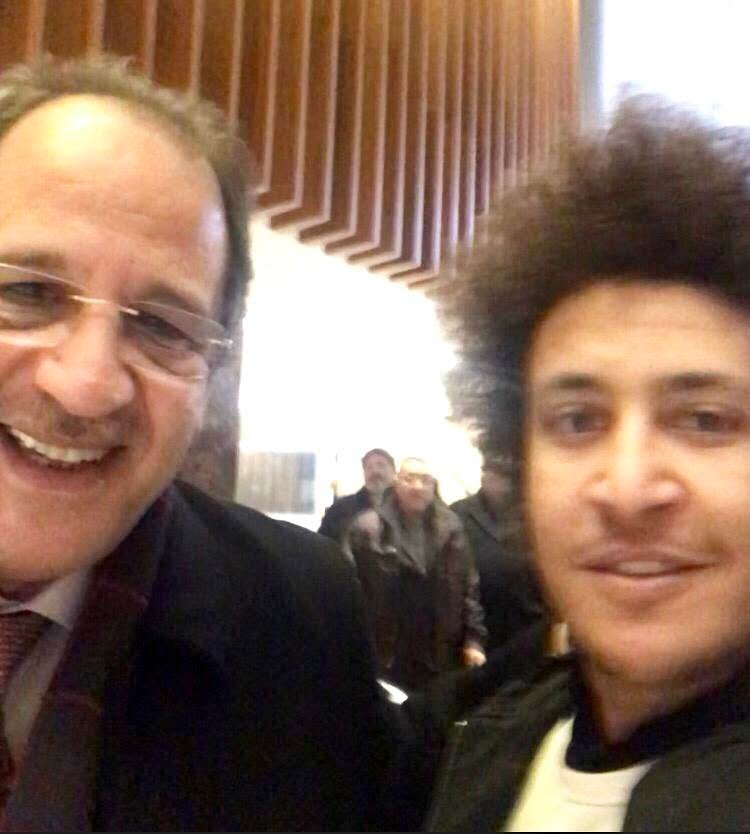
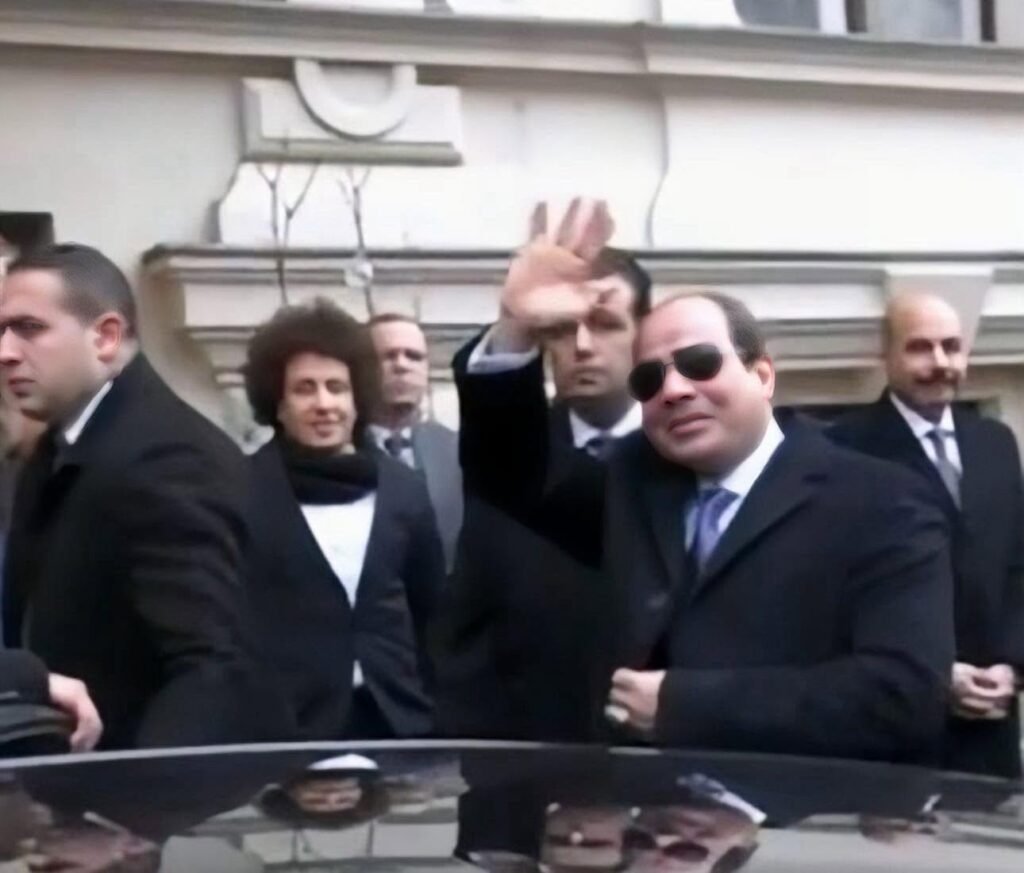
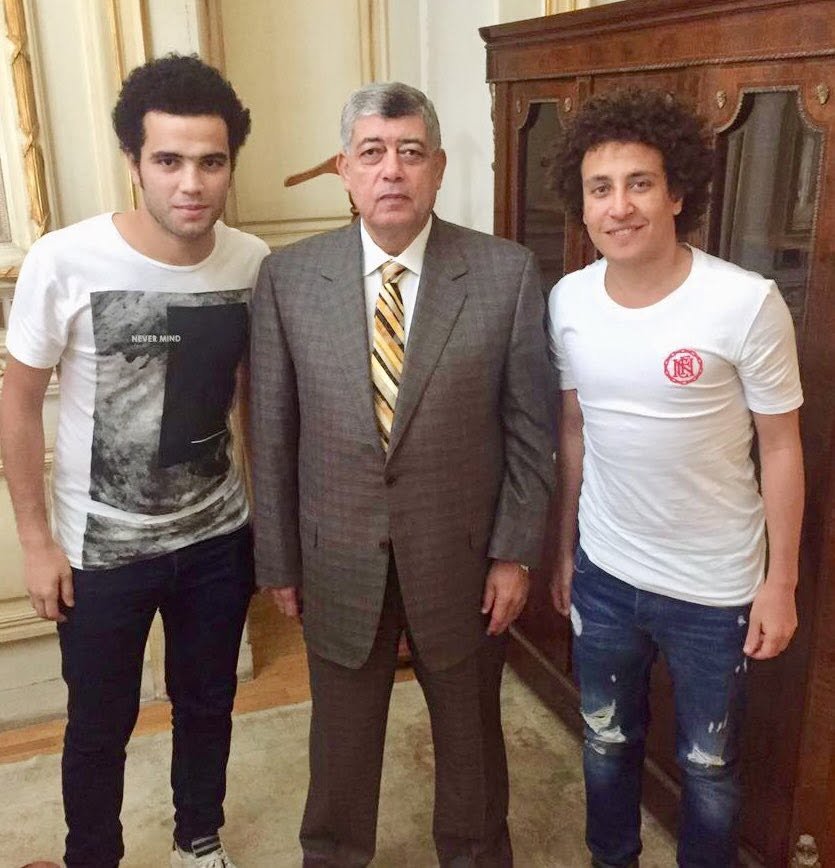
Publicly available photographs, videos, and records show some of the individuals cited in this report participating in meetings and events attended by senior Egyptian state and security officials, including former Director of the Egyptian General Intelligence Service Abbas Kamel, former Minister of Interior Mohamed Ibrahim, and President Abdel Fattah el-Sisi. While such appearances do not in themselves establish responsibility or direction, they form part of the broader context relevant to assessing the roles and influence of actors involved in the incidents documented herein.
United Nations experts have stressed that states have a responsibility to adopt preventive measures to protect individuals at risk of transnational repression, conduct independent and effective investigations, and strengthen cooperation and information-sharing among competent authorities to identify and address cross-border patterns and networks. These recommendations are consistent with the European Parliament’s resolutions of November 2025 and June 2026 on transnational repression, both of which called for enhanced judicial and security cooperation, improved information exchange among Member States, and stronger institutional capacity to connect incidents occurring across multiple jurisdictions.
A similar conclusion was reached in the position paper issued by the German Coalition Against Transnational Repression, of which LDSF is a founding member. The paper argues for a shift away from treating incidents as isolated events and toward understanding them as interconnected components of a broader system of cross-border actors, relationships, and functions. Such an approach is essential for identifying recurring patterns, understanding operational networks, and developing effective responses to transnational repression.
The ongoing investigations in the Netherlands represent an important test of the ability of European authorities to connect related incidents, complaints, and investigations emerging across multiple jurisdictions, including the Netherlands, Germany, the United Kingdom, France, and Belgium. Establishing these connections is critical to understanding the full scope of transnational repression, identifying the actors and networks involved, and preventing the continuation or expansion of similar practices across Europe.
More broadly, the incidents documented in this report underscore the need for a coordinated European response capable of moving beyond the investigation of individual cases to address transnational repression as a systemic phenomenon. Effective accountability requires not only examining discrete criminal acts, but also identifying recurring patterns of conduct, the networks that facilitate them, and the cross-border mechanisms through which intimidation, surveillance, harassment, and digital targeting are carried out against individuals exercising their fundamental rights in exile.
9. Accountability Efforts
As part of its commitment to promoting accountability and combating impunity in cases of transnational repression, Law and Democracy Support Foundation (LDSF) has submitted a comprehensive evidentiary dossier to the relevant authorities for investigation. The dossier contains documentation relating to the incidents, individuals, networks, and activities described in this report.
In addition, acting under a formal authorization from Nancy Kamal, an Egyptian activist residing in Germany, LDSF submitted complaints on 18 October 2026 concerning a series of incidents carried out by Ahmed Naser following her participation as the official spokesperson for the First National Conference of the Egyptian Opposition Abroad in The Hague. The reported incidents included surveillance, online harassment, reputational attacks, and the publication of photographs and personal information relating to her. Nancy Kamal was compelled to leave Egypt in 2018 after being subjected to multiple arrests and periods of detention in connection with her political activism. These included her detention on 10 April 2016 and again on 29 June 2017, before her release on 30 August 2017. Following her departure from Egypt, an Emergency State Security Court issued an in absentia judgment against her in Case No. 1 of 2018, sentencing her to two years’ imprisonment. She has resided in Germany since 2020.
Separately, Egyptian political activist Anas Habib, who resides in the Netherlands, previously filed a complaint with the Dutch authorities concerning a physical assault committed against him by Ahmed Naser on 26 May 2026. This incident appears to correspond to the separate investigation referenced in the statement issued by Dutch police on 28 October 2026, which noted an ongoing case under the supervision of the Amsterdam Public Prosecution Service involving allegations of premeditated assault and violent theft.
Egyptian activist Adham Hassanein, who resides in the Netherlands, also submitted a complaint to the competent authorities in August 2025, followed by a further complaint in September 2026, concerning separate incidents of intimidation and targeting allegedly linked to members and leaders of the Egyptian Youth Union Abroad, including Ahmed Abdelkader and Ahmed Naser.
LDSF was also informed by Egyptian political activist Abdelghani Nagi, who resides in the Netherlands and was known for publishing political content and commentary through public social media platforms, including a Facebook page that was subsequently removed, that he received a series of threatening messages from Ahmed Abdelkader. LDSF reviewed copies of the communications, which contained abusive language, threats of physical harm, references that could reasonably be interpreted as threats of sexual violence, and statements indicating an intention to locate and confront the activist. According to information available to LDSF, Abdelghani Nagi subsequently submitted complaints to the competent Dutch authorities in August 2025 concerning Ahmed Abdelkader, Ahmed Naser, and related incidents of intimidation and targeting.
Taken together, these accountability efforts demonstrate that concerns relating to the activities documented in this report have not been raised solely by civil society organizations, but have also resulted in formal complaints and investigations across multiple jurisdictions. This underscores the importance of effective legal and institutional responses to transnational repression, as well as the need to examine the roles and functions of proxy actors operating across borders where allegations involve coordinated acts of intimidation, surveillance, harassment, or interference targeting individuals exercising their fundamental rights while living in exile.
10. Recommendations
To the Dutch Authorities
- Continue ongoing investigations in an independent, thorough, and effective manner, including by examining all relevant incidents reported in recent years.
- Assess whether the conduct under investigation forms part of a broader pattern of transnational repression targeting dissidents, human rights defenders, journalists, and critics of the Egyptian government residing in Europe.
- Ensure that investigations consider the broader context and interconnected nature of reported incidents, rather than treating each case in isolation.
To European Governments and Competent Authorities
- Strengthen information-sharing, judicial cooperation, and law enforcement coordination among authorities in Germany, the Netherlands, Austria, Belgium, France, the United Kingdom, and other European states.
- Utilize existing European cooperation mechanisms, including Europol, Eurojust, and relevant law enforcement networks, to facilitate information-sharing, cross-border investigations, and joint analysis of transnational repression cases.
- Develop specialized mechanisms for monitoring, documenting, and investigating cases of transnational repression.
- Establish clearly designated national contact points to receive complaints, referrals, and information related to transnational repression.
- Improve procedures for collecting, consolidating, and analyzing information obtained from law enforcement agencies, affected communities, researchers, and civil society organizations.
- Invest in building the capacity of law enforcement agencies, prosecutors, judges, and asylum and migration authorities to identify and respond effectively to transnational repression.
To the European Union and EU Institutions
- Support efforts to identify recurring cross-border patterns and connect related incidents occurring across multiple jurisdictions.
- Promote coordinated European responses to transnational repression and foreign interference targeting diaspora communities.
- Strengthen EU-wide policy frameworks, monitoring mechanisms, and information-sharing initiatives aimed at addressing transnational repression and protecting individuals at risk.
- Support research, documentation, and data collection initiatives that improve understanding of transnational repression, proxy actors, and foreign influence activities across Europe.
On Victim Protection and Access to Remedies
- Ensure effective protection for victims, witnesses, and individuals who have submitted complaints or testimony related to transnational repression.
- Provide secure and accessible reporting mechanisms, appropriate legal assistance, and psychosocial support services.
- Adopt victim-centered and gender-sensitive approaches that recognize the specific risks faced by women human rights defenders, journalists, political activists, and other targeted individuals.
- Implement preventive protection measures where known or foreseeable risks exist.
On Digital Transnational Repression
- Recognize digital transnational repression as a priority area for public policy and law enforcement action.
- Investigate coordinated online harassment campaigns, digital defamation, online threats, doxxing, digital surveillance, and cyber-enabled intimidation targeting individuals in exile.
- Examine the misuse of artificial intelligence, synthetic media, and manipulated content in campaigns of intimidation, harassment, and reputational harm directed at dissidents and human rights defenders.
On Proxy Actors and Cross-Border Networks
- Examine the roles and functions performed by non-state actors, informal networks, and proxy actors involved in transnational repression.
- Assess the practical function and impact of such actors rather than limiting analysis to formally acknowledged institutional relationships with state authorities.
- Incorporate the functional approach endorsed by United Nations human rights experts in the assessment of transnational repression cases.
To the Egyptian Authorities
- Fulfil Egypt’s obligations under international human rights law, including obligations relating to freedom of expression, association, peaceful assembly, and political participation.
- Refrain from any acts of transnational repression targeting dissidents, journalists, political opponents, human rights defenders, and other individuals residing outside Egypt.
- Ensure that state institutions, affiliated entities, and non-state actors are not used to carry out acts of intimidation, surveillance, harassment, reprisals, or other forms of targeting linked to the exercise of fundamental rights and freedoms.
- Conduct prompt, independent, and effective investigations into allegations of transnational repression and hold those responsible accountable, regardless of their official or non-official status.
- Cooperate with international human rights mechanisms and relevant authorities addressing allegations of transnational repression, foreign interference, and related reprisals.