The joint statement emerged from a strategic retreat and consultations that brought together UN experts and civil society actors, and affirms the responsibility of host States to provide protection and prevent abuses.
Law and Democracy Support Foundation (LDSF) welcomes the joint statement issued by more than 130 United Nations experts from the UN Special Procedures and Treaty Bodies on transnational repression, which represents one of the most comprehensive and coordinated UN positions to date in addressing this growing phenomenon targeting human rights defenders, journalists, political dissidents, and ordinary citizens beyond the borders of their countries of origin.
The joint statement marks an important development in the United Nations system’s approach to transnational repression. It provides a comprehensive definition of these practices, affirms that States’ human rights obligations do not end at their territorial borders, and clarifies States’ responsibilities to prevent such violations, respond to them effectively, and ensure protection and effective remedies for those affected.
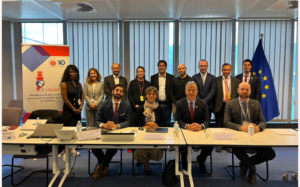
The joint statement emerged from a two-day strategic retreat and expert consultation organized by the International Service for Human Rights (ISHR) in Geneva in June 2026, bringing together members of UN Special Procedures and Treaty Bodies, alongside experts, academics, lawyers, human rights defenders, civil society organizations, and individuals and communities affected by transnational repression. The retreat aimed to strengthen coordination among UN mechanisms and develop a more effective response to this phenomenon. The adoption of a joint UN statement on transnational repression was one of the key outcomes of these discussions.
During the strategic retreat, Law and Democracy Support Foundation (LDSF) contributed its expertise on transnational repression in the Egyptian context. Basma Mostafa, the Foundation’s Programs Director, delivered the keynote address at the opening session and participated in expert discussions on patterns of transnational repression and their impact on individuals and exile and diaspora communities. The Foundation highlighted documented patterns including the targeting of family members, the misuse of terrorism-related charges, the denial of identity documents and consular services, risks of refoulement, and the abuse of international security and judicial cooperation mechanisms. It also drew attention to the cumulative psychological, social, and economic consequences of these practices and the need to strengthen host-State responses and address persistent protection gaps affecting targeted individuals living outside their countries of origin.
The Foundation believes that the significance of this statement lies not only in the unprecedented consensus it reflects among more than 130 UN experts and mechanisms, but also in its contribution to developing a more comprehensive international approach to transnational repression and its multiple impacts. The Foundation further notes that the language, analysis, and recommendations contained in the statement clearly reflect a number of issues and patterns that were raised during the consultations. The statement also highlights the profound effects of these practices on exile and diaspora communities, including pressure placed on family members, legal precarity, insecurity, erosion of trust within affected communities, and the long-term consequences for the mental health and socio-economic stability of targeted individuals and their families.
The joint statement is particularly significant because it shifts the international discussion beyond an exclusive focus on States that perpetrate transnational repression and emphasizes the responsibility of host States to prevent, protect against, and respond effectively to such practices. It further stresses that host States may contribute, either through action or omission, to enabling such violations when they ignore known or foreseeable risks or provide forms of cooperation that facilitate or sustain them.
Rather than merely diagnosing the problem, the statement provides a broad range of practical recommendations directed at States, international organizations, regional bodies, the private sector, and civil society. These recommendations include strengthening oversight of the misuse of INTERPOL mechanisms and international security and judicial cooperation frameworks; establishing national coordination and protection mechanisms; developing tailored support measures for affected individuals and communities; ensuring respect for the principle of non-refoulement; providing legal, psychological, and social protection to those affected; and strengthening accountability for violations associated with transnational repression.
The full text of the joint UN statement on transnational repression, endorsed by more than 130 UN experts, is available at: