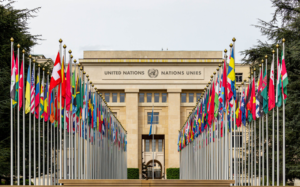
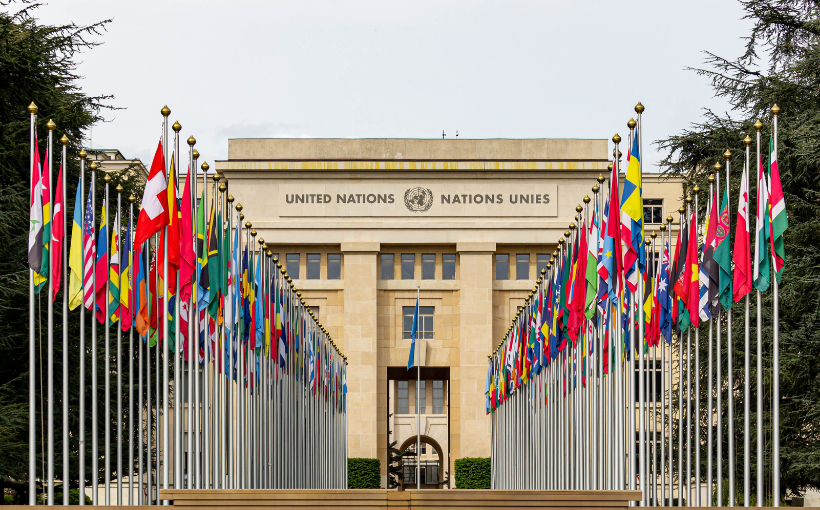
United Nations Office in Geneva. photo by Hugo Magalhaes via pexels
A group of United Nations experts has expressed deep concern over the arrest, enforced disappearance, and detention of six journalists from Mesadash, an independent Egyptian fact-checking and investigative journalism platform. The experts described the case as another alarming example of the ongoing crackdown on independent media, civic space, and freedom of expression in Egypt.
According to the experts, journalists Mohamed Ashraf, Abdallah Kadri, Islam Barakat, Omar Helal, Mohamed Adel, and Mohamed Mahmoud, who make up the platform’s entire newsroom, were arrested and forcibly disappeared for five days in September 2026 before appearing before Egypt’s Supreme State Security Prosecution on terrorism-related charges.
The experts also reported receiving information indicating that the journalists were subjected to torture and other forms of ill-treatment during their enforced disappearance and were denied access to legal counsel. They condemned the use of enforced disappearance and torture against journalists, stressing that the prosecution of the Mesadash team reflects a broader pattern of targeting independent media through the misuse of counterterrorism legislation.
The experts further warned that the case extends beyond the detention of the journalists themselves. In their statement, they raised concerns about what they described as patterns of transnational repression targeting Abdelrahman Mansour, the platform’s founder, who resides outside Egypt.
According to the experts, Mansour has been subjected to smear campaigns, threats, and violations of his privacy after Egypt’s Ministry of Interior publicly described him as a “fugitive.” They warned that such practices pose serious risks to press freedom, civic participation, and democratic engagement across borders.
The experts also emphasized that the prosecution of Mesadash journalists and the pressure directed against Mansour should not be viewed as separate incidents. Rather, they reflect an increasingly common pattern of targeting journalists, human rights defenders, and independent voices beyond Egypt’s borders.
These concerns are consistent with findings published by the Law and Democracy Support Foundation (LDSF) in its recent policy paper, “Beyond Counterterrorism: The Use of Counterterrorism Policies and Legislation in Transnational Repression.“ The paper documents how Egyptian authorities have increasingly relied on counterterrorism and national security accusations against journalists, researchers, and human rights defenders, including through the criminalization of legitimate professional activities such as fact-checking and professional communication with individuals and institutions abroad.
The report further documents a coordinated media campaign targeting Abdelrahman Mansour following the arrest of the Mesadash journalists. LDSF monitored 41 media reports, public statements, and digital posts published within just five days, the majority of which focused on attacking Mansour personally rather than examining the legal and human rights dimensions of the case.
The monitoring found repeated allegations linking Mansour to terrorism, foreign funding, and the Muslim Brotherhood, alongside efforts to discredit independent fact-checking initiatives and digital journalism more broadly.
LDSF argues that this campaign goes beyond media smear tactics and constitutes a form of transnational repression aimed at isolating journalists living in exile, undermining their credibility, and creating a public narrative that legitimizes judicial and security measures against them.
The organization considers the Mesadash case a particularly stark example of how multiple forms of transnational repression can operate simultaneously. These include enforced disappearance, torture, the criminalization of cross-border professional cooperation, coordinated media defamation campaigns, and the targeting of journalists residing outside their country of origin.
To read LDSF’s paper, “Beyond Counterterrorism: The Use of Counterterrorism Policies and Legislation in Transnational Repression,” which also examines the Mesadash case and the campaign targeting Abdelrahman Mansour, please visit the following link