Photo Via theiij.org
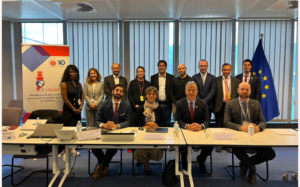
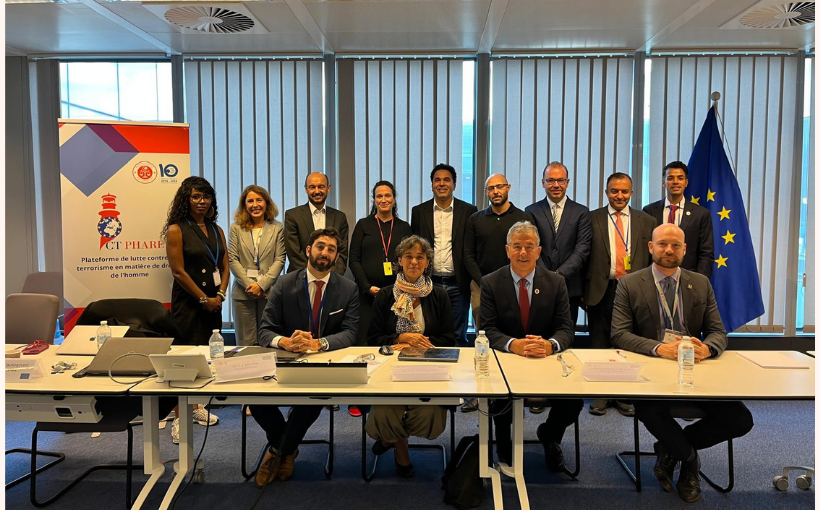
Law and Democracy Support Foundation (LDSF) participated in a regional activity organized by the International Institute for Justice and the Rule of Law (IIJ) from 2 to 4 September in Brussels, Belgium, aimed at strengthening the capacity of civil society organizations across the Middle East and North Africa (MENA) to engage safely and effectively in counter-terrorism oversight and accountability mechanisms.
The Foundation was represented by Karim Abdelrady, Chief Executive Officer of LDSF, alongside representatives of civil society organizations from Egypt, Jordan, Lebanon, and Tunisia.
The activity also brought together representatives from the European Commission, the European External Action Service (EEAS), the United Nations Office on Drugs and Crime (UNODC), the Office of the European Union Special Representative for Human Rights, and the Service for Foreign Policy Instruments (FPI), as well as a number of international experts and officials working on counter-terrorism and human rights issues.
The event served as a platform for exchanging regional experiences and expertise and discussing the challenges facing civil society organizations in overseeing counter-terrorism policies. Key topics included transparency and access to information, the protection of human rights defenders, the involvement of civil society in policy and legislative processes, as well as challenges related to administrative detention and exceptional measures adopted in the name of counter-terrorism.
During discussions on the role of civil society in counter-terrorism oversight, Karim Abdelrady highlighted the challenges facing independent oversight of counter-terrorism measures in Egypt, stating:
“Oversight of counter-terrorism in Egypt is a highly complex and sensitive issue, as we are dealing with authorities that view their survival as closely tied to the reliance on security-based solutions rather than dialogue and political solutions. The official narrative consistently invokes the existence of imminent security threats that allegedly require exceptional restrictions under the pretext of combating terrorism.”
He added:
“As a result, there has been a tendency across state institutions, including parts of the judiciary and prosecution authorities, to deliberately withhold information in terrorism-related cases, which significantly undermines opportunities for independent oversight and accountability. Furthermore, the establishment of specialized terrorism circuits, whose independence is widely questioned, raises serious concerns regarding the state’s commitment to balancing counter-terrorism efforts with the principles of justice and the rule of law.”
Abdelrady further noted:
“Egyptian authorities systematically and alarmingly use counter-terrorism legislation to target political opponents, peaceful critics, and human rights defenders. This practice strips many of these laws of their original purpose and transforms them into tools for restricting fundamental rights and freedoms.”
The activity also featured in-depth discussions on the GCTF Brussels Memorandum, which emphasizes the importance of independent oversight of counter-terrorism policies through parliaments, judicial authorities, specialized oversight bodies, and civil society organizations.
Participants further discussed a number of recommendations aimed at strengthening the role of civil society in counter-terrorism oversight, including establishing institutionalized and continuous consultation mechanisms between governments and civil society, enhancing protection measures for human rights defenders and documentation actors, ensuring that civil society organizations are engaged as equal partners in counter-terrorism legislative reform processes, and promoting peer learning and exchange of experiences among civil society actors across the MENA region and beyond.
At the conclusion of the activity, participants underscored the importance of strengthening cooperation between civil society organizations and national and international oversight mechanisms to ensure that counter-terrorism policies are developed and implemented in a manner that respects human rights and the rule of law, while maintaining an appropriate balance between security considerations and fundamental freedoms.
Law and Democracy Support Foundation reiterates its commitment to advancing accountability and oversight of counter-terrorism policies and to supporting the role of civil society and human rights defenders in ensuring that such policies comply with international human rights standards and the principles of the rule of law.