
The Egyptian Commission for Rights and Freedoms (ECRF) and Law and Democracy Support Foundation (LDSF) Call for the Immediate Release of Writer Peter Tawfik Kamal
The Egyptian Commission for Rights and Freedoms (ECRF) and Law and Democracy Support Foundation (LDSF) condemn the continued detention of writer and novelist Peter Tawfik Kamal Tawfik in connection with Case No. 1184 of 2026 (Mallawi Police Department Administrative Doket), in which he faces charges of “contempt of religion” and “leading and organizing a group allegedly aimed at promoting atheism, insulting revealed religions, and inciting sectarian strife.”
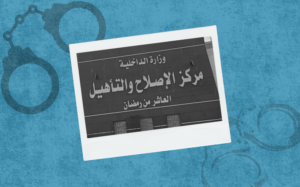
Peter Tawfik was summoned to the headquarters of the National Security Agency adjacent to the Mallawi Police Station in Minya Governorate on 14 April 2026 at 12:00 p.m., following a phone call requesting that he appear to provide certain information. Upon his arrival, however, he was immediately detained, and all contact with his family and lawyer was cut off. He was unable to communicate with the outside world for eight days before reappearing on 22 April 2026 before the Mallawi Prosecution Office through an arrest report dated the same day, in connection with the aforementioned case.
During the investigation, Peter stated that he had been subjected to enforced disappearance throughout the period between his detention and his appearance before the prosecution. His family also submitted several complaints and telegrams to the National Council for Human Rights, the Minister of Interior, and the Public Prosecutor, reporting his enforced disappearance and demanding disclosure of his whereabouts. To date, however, no independent or effective investigation has been initiated into these allegations.
Peter further requested to be examined by a specialist physician during the investigation, given that he suffers from bipolar disorder and requires regular medical follow-up and specific treatment. The authorities have not responded to this request, raising serious concerns regarding his health condition and conditions of detention.
This case comes within the context of a recurring pattern of security-driven prosecutions targeting journalists, writers, and artists because of their intellectual and literary production or their peaceful exercise of the right to freedom of thought, opinion, and expression. Such practices impose increasing restrictions on creative freedom and further shrink the already limited public space available for free expression in Egypt.
These practices are inconsistent with the constitutional guarantees enshrined in Egypt’s 2014 Constitution, as amended in 2019. Article 64 stipulates that “freedom of belief is absolute,” while Article 65 guarantees “freedom of thought and opinion” and affirms every individual’s right to express opinions through speech, writing, photography, or any other means of expression and publication.
Article 67 further guarantees freedom of artistic and literary creativity and prohibits custodial penalties for crimes committed as a result of the public nature of artistic, literary, or intellectual works, except in cases involving incitement to violence, discrimination among citizens, or defamation of individuals. Likewise, Article 71 prohibits custodial penalties for publication- and publicity-related offenses, subject only to the same narrowly defined exceptions.
At the international level, Article 19 of the Universal Declaration of Human Rights guarantees everyone the right to freedom of opinion and expression, including the freedom to hold opinions without interference and to seek, receive, and impart information and ideas through any media and regardless of frontiers. Similarly, Article 19 of the International Covenant on Civil and Political Rights (ICCPR), to which Egypt is a State Party, affirms the right of every person to hold opinions without interference and guarantees freedom of expression, including the right to seek, receive, and impart information and ideas through various means.
The continued detention of Peter Tawfik on account of his literary works and the ideas or opinions attributed to him constitutes a serious violation of rights guaranteed under both domestic and international law. It also sends a deeply troubling message regarding the state of freedom of expression and artistic and literary creativity in Egypt.
Accordingly, the Egyptian Commission for Rights and Freedoms and Law and Democracy Support Foundation call for:
- The immediate and unconditional release of writer and novelist Peter Tawfik Kamal Tawfik.
- The dismissal of all charges brought against him in relation to his peaceful exercise of the rights to freedom of thought, expression, and literary creativity.
- The opening of an independent, impartial, and effective investigation into allegations of his enforced disappearance between 14 and 22 April 2026, and the accountability of those responsible.
- Ensuring that he receives the necessary healthcare and appropriate medical treatment for his condition without delay.
- The full compliance of the Egyptian authorities with the provisions of the Egyptian Constitution and Egypt’s international obligations concerning the protection of freedom of opinion, expression, belief, and artistic and literary creativity.
- The cessation of the use of “contempt of religion” charges and other vague legal provisions to criminalize peaceful expression or intellectual and literary production.