Human rights organizations call for immediate investigation into security agencies’ abuses of Matsadaksh journalists
The torture and enforced disappearance of journalists from the Matsadaksh platform are allegations that must be immediately and independently investigated, the undersigned human rights organizations urge. The violations allegedly occurred during interrogations of the journalists following their arrest and detainment at National Security Agency premises, where they were held for five days. They were then brought before the Supreme State Security Prosecution for questioning, with the charges against them demonstrating political and retaliatory motives. The organizations underscore that the arrest, enforced disappearance, and torture of the entire Matsadaksh journalism team is a continuation of the Egyptian authorities’ longstanding policy of suppressing and silencing independent journalism and free expression over the past 13 years.
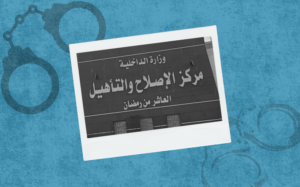
Between 28 September and the early hours of the following morning, National Security Agency forces arrested all six editorial team members of the investigative platform Matsadaksh, who are from different governorates. After confiscating their phones and personal computers, the authorities forcibly disappeared them in a National Security Agency facility for five days. During this period, 18 reports were filed concerning their disappearance, before they were brought before the Supreme State Security Prosecution for questioning in Case No. 8083 of 2026 (Supreme State Security cases). The six journalists were unable to communicate with their families or meet privately with their lawyers, either before or after the interrogation.
The prosecution charged them with joining a terrorist group, under the provisions of the Counter-Terrorism Law No. 94 of 2015, as well as publishing false news and using a social media website for this purpose, under the provisions of the Anti-Cyber and Information Technology Crimes Law No. 175 of 2018. All of them, with the exception of journalist Ashraf Abu Omaira, were also charged with committing an offence related to terrorist financing. These are the same charges that Egyptian authorities have routinely brought against a wide array of political dissidents, including journalists, politicians, and human rights defenders, over the past decade.
On 5 October, following the conclusion of the investigation, the prosecution ordered the six journalists to be remanded in pre-trial detention. They were subsequently transferred to Badr 1 Prison.
During the lengthy interrogations, which lasted for several hours, the journalists told the prosecution that they had been subjected to serious violations and various forms of torture and inhuman treatment while they had been forcibly disappeared. These included being restrained with their hands behind their backs and blindfolded throughout the unlawful interrogations inside National Security Agency premises, as well as being beaten, stripped of their clothes, subjected to electric shocks, and threatened with harm to themselves or their family members. They were also forced to record fabricated confessions on camera.
According to the lawyer of one of the journalists, his client was beaten, verbally abused, subjected to electric shocks, and denied his medication. He was also forced to record a confession, a process that took eight hours due to repeated filming to ensure that no marks of the assault on his body or his torn clothing would appear on camera. He was even forced to wear different clothes.
The prosecution, however, refrained from conducting a serious and independent investigation into these allegations, limiting its statement to noting that there were no visible injuries on the journalists’ bodies. Its statement also made no mention of the five-day enforced disappearance of the six journalists before they appeared before the investigating authority, or of their being denied contact with their families and lawyers during that period.
The undersigned organizations reject the prosecution’s statement, which reflects its failure to investigate the crimes of enforced disappearance and torture. Instead, the prosecution has deliberately criminalized the legitimate practice of journalism work, including professional contracts, the receipt of remuneration, and communication among members of the editorial team.
The organizations warn of the grave consequences of the Public Prosecution’s continued alignment with the security agencies’ narrative without conducting an independent investigation into the reported violations. Such conduct is inconsistent with its constitutional and legal obligation to protect rights and freedoms and uphold the rule of law.
The torture, ill-treatment, and enforced disappearance of Egyptian journalists is indicative of a recurrent and established security agency practice in its dealings with detained political opponents, human rights defenders, and journalists. In its Concluding Observations on Egypt in December 2023, the UN Committee against Torture found that torture and ill-treatment continue to be systematically used in Egypt by police officers, prison guards, and other members of the security forces and armed forces, whether in police stations, prisons, National Security Agency facilities, or military premises, as well as in unofficial places of detention, particularly during arrest, interrogation, and investigation. The Committee also expressed serious concern over the absence of any independent, effective, and confidential mechanism for receiving complaints of torture in Egypt, and called on the Egyptian authorities to conduct prompt, effective, impartial, and independent investigations into all allegations of torture.
Over the course of a decade (2013–2023), independent human rights organizations have also documented numerous cases confirming that torture in Egypt is a systematic crime that may amount to crimes against humanity, used, among other purposes, to extract confessions and punish and intimidate detainees. Human rights reports have also documented the frequent failure of the prosecution and judiciary to conduct serious investigations into complaints and allegations of torture and ill-treatment.
All of this forms part of a broader policy aimed at suppressing and intimidating all avenues and platforms for free expression, whether through a set of recurring charges that often result in prolonged pre-trial detention for their members, or by blocking websites and obstructing their work. The editor-in-chief of Mada Masr, Lina Attalah, was previously summoned for questioning, while the premises of the independent news outlet Al-Manassa were raided and its editor-in-chief, Nora Younis, was arrested. Cartoonist Ashraf Omar has also been detained for more than two years, while activist Ahmed Douma was unjustly sentenced to prison over an opinion article. More recently, journalist Rasha Azab was summoned on 5 October to be questioned over her views published on social media. The number of journalists currently detained in Egyptian prisons has now risen to 26. This places Egypt among the countries in the region with the highest number of detained journalists and is reflected in its ranking of 169th out of 180 countries on the World Press Freedom Index.
These cases once again expose the wide gap between official rhetoric about opening up dialogue and developing the media sector, and the Egyptian authorities’ actual practices towards independent journalism and critical voices. This includes ongoing preparations for the first annual Media Conference, scheduled for 3 December and commissioned by the President with the stated aim of opening a broader dialogue with society and presenting diverse views.
The undersigned organizations stress that any official call to develop the media or expand public dialogue lacks credibility and seriousness unless it is accompanied by a fundamental change in state policies towards independent journalism and platforms for free expression. This must include the immediate release of all journalists detained in connection with their journalistic work; independent and effective investigations into allegations of torture and ill-treatment against them; an end to the prosecution of journalists, bloggers, and dissidents and their imprisonment on fabricated charges; the lifting of website blocks; and the creation of a safe and independent environment in which journalists can carry out their watchdog role without fear of retaliation or punishment.
Signatory Organizations:
EgyptWide for Human Rights
Cairo Institute for Human Rights Studies (CIHRS)
El Nadeem Center
Egyptian Front for Human Rights (EFHR)
Committee for Justice (CFJ)
Refugees Platform in Egypt (RPE)
Law and Democracy Support Foundation (LDSF)
Egyptian Human Rights Forum (EHRF)