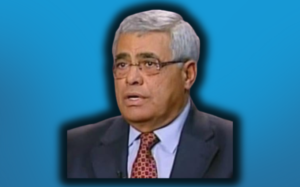

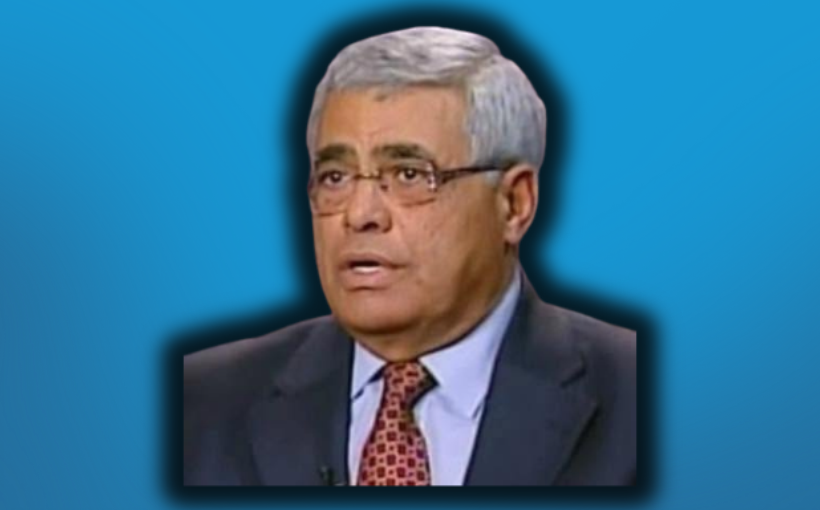
Law and Democracy Support Foundation (LDSF) condemns the travel ban imposed on Dr. Hassan Nafaa, professor of political science at Cairo University, and calls on the Egyptian authorities to disclose the decision and its legal basis, and to revoke it unless it rests on a reasoned judicial order of fixed duration, as the Constitution requires.
According to a post on the Facebook page where he publishes his articles, through which he addressed a complaint to the Public Prosecutor, Dr. Nafaa went to Cairo Airport on 5 November 2026 to travel abroad. After completing departure procedures and receiving his boarding pass, he was asked to wait while his passport was checked, and was then escorted to the airport security office, where he was initially told that the matter was a routine procedure caused by a similarity of names. After about an hour of waiting, the competent official confirmed that there was a decision banning him from travel, and an officer apologised to him for the incident. He then left the airport and returned home without travelling.
In the post, Dr. Nafaa also referred to a related matter: the renewal of his car licence has been blocked for about two years because of a restriction placed on the vehicle, and the director of the Faisal Traffic Unit informed him that renewal requires a letter lifting the restriction.
Nafaa was arrested in September 2019 during a wave of arrests that followed the 20 September protests. While he was in detention, an order was issued freezing his assets. He was released in March 2020 without trial, and a court ruling later annulled the freeze on his property and movable assets. He considers that the continued travel ban and the obstruction of his car licence renewal have no legal basis following that ruling.
LDSF affirms that freedom of movement is guaranteed both constitutionally and internationally. Article 62 of the Egyptian Constitution does not permit any citizen to be prevented from leaving the territory of the State except by a reasoned judicial order, for a specified period, and in the cases defined by law. Article 12 of the International Covenant on Civil and Political Rights, which Egypt has ratified, guarantees everyone the freedom to leave any country, including their own, and permits restrictions on this right only where they are provided by law, necessary and proportionate, as elaborated by the Human Rights Committee in its General Comment No. 27.
Accordingly, if the ban rests on a decision, the person concerned must be notified of it, along with its grounds, legal basis, duration and issuing authority, so that he can challenge it, rather than being surprised by it in an airport security office after completing his departure procedures. Moreover, the fact that the stop was first explained as a similarity of names, and that the existence of a ban was only then acknowledged, heightens the need for the decision and its basis to be made known.
If the travel ban and the vehicle restriction are indeed effects of the annulled asset-freezing order, their continuation raises a serious question about the enforcement of judicial rulings. Article 100 of the Constitution obliges the State to guarantee the means of enforcing judgments, and makes it a criminal offence for the competent public officials to refrain from enforcing them or to obstruct their enforcement. Dr. Nafaa indicated in his complaint that the ruling may not have reached the competent authorities, which calls for an urgent administrative investigation.
Dr. Hassan Nafaa’s case is not an isolated one. It comes in the context of measures that differ in their legal basis but result in restricting the freedom of movement of former detainees for long and indefinite periods because of their opinions and peaceful activism. The Egyptian authorities have previously issued travel bans against human rights lawyer Mohamed El-Baqer, whose appeal against his inclusion on the terrorism list was not accepted; researcher Ahmed Samir Santawy; and Mohamed Basheer and Karim Ennarah, two senior staff members of the Egyptian Initiative for Personal Rights (EIPR), as well as EIPR’s former executive director Gasser Abdel-Razek.
The Law and Democracy Support Foundation calls for:
- Immediate disclosure of the decision under which Dr. Nafaa was banned from travel, including its legal basis, duration and issuing authority.
- Written notification of the decision to Dr. Nafaa by a means that provides proof of delivery, and enabling him to challenge it before the competent court.
- Lifting the travel ban unless it rests on a reasoned judicial order of fixed duration.
- Examination of the complaint Dr. Nafaa addressed to the Public Prosecutor, and publication of its outcome.
- Verification that the ruling annulling the asset freeze has been enforced and communicated to the relevant authorities, and removal of all effects of the annulled order, including the restriction on the vehicle.
- An independent investigation into the circumstances of the airport incident, including the enforcement of the ban without written notification.
- Revocation of arbitrary travel bans imposed on human rights defenders and on anyone barred from travel because of their opinions or peaceful activism.