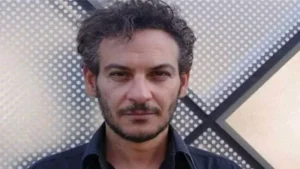
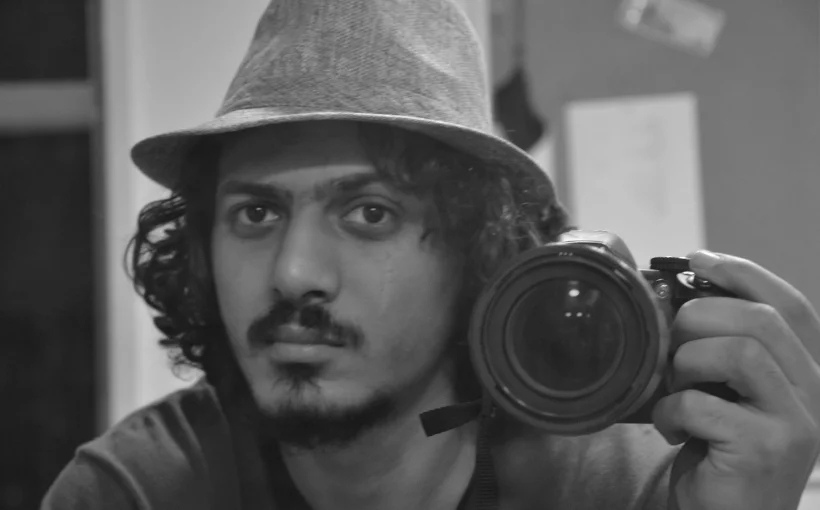
Law and Democracy Support Foundation (LDSF) condemns the continued detention of filmmaker and screenwriter Omar Salah Marei. It also condemns the latest developments in his detention conditions, which his family disclosed after visiting him on Thursday, 5 November 2026. These include his ongoing health problems, which have gone untreated and without the necessary medical care. They also include the confiscation of a number of his writings, notes, and creative projects inside the prison during a search. This follows his wife’s announcement of a three-day partial hunger strike starting on 8 November 2026, in protest at the violations her husband is suffering and what she described as deliberate medical neglect by the prison administration.
On 11 May 2026, a security force raided Omar’s home without a prior judicial warrant. They arrested him, destroyed the contents of his apartment, and confiscated four laptops and two phones. They also seized approximately EGP 50,000, which was not recorded in the arrest report or later entered into the investigation record. Omar was then taken to an undisclosed location, where he was forcibly disappeared for five days. He appeared before the State Security Prosecution on 16 May 2026 in Case No. 3383 of 2026 (Supreme State Security Prosecution).
Omar has been held in pretrial detention ever since. The charges relate to the peaceful exercise of his freedom of expression. He had posted political and social criticism of conditions in Egypt on social media. He had also posted satirical or critical opinions about the film industry, some artworks being shown at the time, and the narratives presented in Egyptian television series and films.
Omar Salah is one of the young voices of Egypt’s independent cinema. His work has been screened at local and international festivals and has won a number of artistic awards. His detention violates the right to freedom of opinion and expression, which is guaranteed by Article 65 of Egypt’s current Constitution and Article 19 of the International Covenant on Civil and Political Rights.
Omar continues to suffer from persistent swelling and pain in his hand and wrist. Shortly before his arrest he had undergone surgery to fix a fracture with plates and screws. He has been unable to complete his physiotherapy or medical follow-up because of his arrest. The prison has ignored his request to continue his treatment at his own expense. He was seen by an orthopedist inside the prison, but the swelling in his hand has not improved. The defense team’s repeated requests to have him examined by a vascular surgeon have gone unanswered.
The medical neglect is also evident in the fact that neither Omar nor his family has been allowed to view the X-rays taken in prison or even to obtain a copy. His thyroid test results have not been handed to him, and he has only been informed of them verbally. According to his wife, the specialist doctor reported a change in thyroid function that calls for a prompt assessment of his condition. This is especially urgent because he decided on his own to stop taking his medication a week ago, in the absence of any clear medical information about his condition.
In addition, his family reported that his cell was searched with the participation of investigative police officers. All his pens, tools, notes, and artistic and creative projects were confiscated, and the contents of his bed and personal belongings were tampered with. The prison administration does have the authority to search wards under the applicable legal rules. However, search procedures do not entitle anyone to violate prisoners’ dignity or fundamental rights. Nor do they justify confiscating prisoners’ belongings, writings, or creative projects without a clear legal basis. Depriving Omar of his writing tools also restricts his right to read, write, and pursue his creative work in detention.
Karim Abdelrady, Executive Director of Law and Democracy Support Foundation, said: “The authorities in Egypt are not content with controlling the media, the press, and the spaces for expressing opinions. Their control and repressive measures now extend to creative freedom in all its forms. It begins with pursuing and harassing writers and creators. It continues with taking over publishing houses and constant censorship of book fairs, which keeps literary and other works from reaching the public. It ends with a tightening grip on film and drama production. The authorities can no longer tolerate even a young director voicing criticism directly related to his own field. This is also evident in the systematic targeting of young content creators on social media, even though they do not address any political or social issues. All of this is consistent with the authorities’ approach of closing the public sphere entirely, imposing their one-sided vision, and entrenching a one-voice policy aimed at silencing every voice but their own.”
LDSF holds the Egyptian authorities fully responsible for Omar Salah’s safety and life. It stresses that detention can in no way justify depriving any prisoner of the right to healthcare.
LDSF calls on the Egyptian authorities to:
- Immediately release Omar Salah Marei and end his detention.
- Intervene urgently to provide appropriate medical care for his condition, including referring him to a vascular surgeon.
- Allow him to view his X-rays and medical tests and to obtain copies of them, follow up on his thyroid condition, and ensure regular treatment based on a specialist medical assessment.
- Investigate the circumstances of the search of his place of detention, which resulted in the confiscation of his writing tools and creative projects, and return all belongings confiscated without a legal basis.
- Respect his rights in detention, guarantee his physical and psychological safety, and refrain from restricting him because of his writings or creative activity