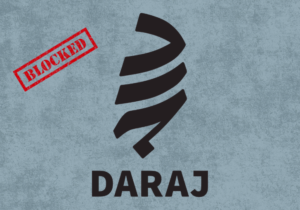

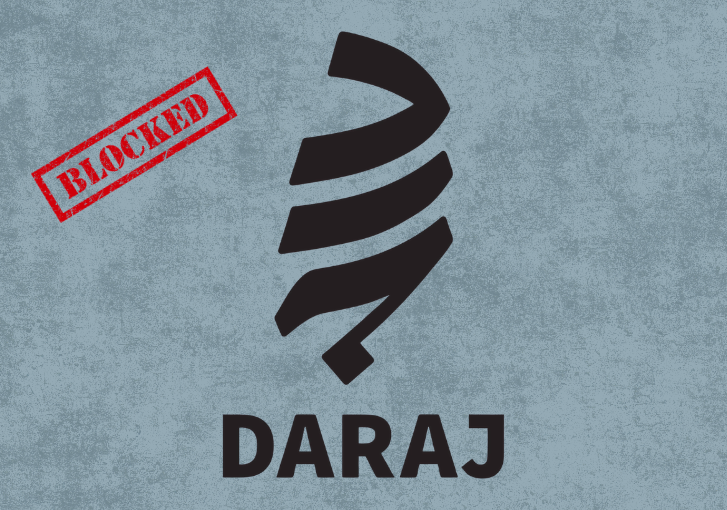
The Law and Democracy Support Foundation (LDSF) condemns the blocking of Daraj’s X account inside Saudi Arabia. On November 27, 2026, Daraj announced on its social media pages that the account had been blocked at the request of the Saudi Public Prosecution. The request did not identify any specific article or give the reasons or legal basis for the block. Daraj’s editorial secretary, Diana Moukalled, also announced on November 26 that X had informed her of the block on her personal account inside Saudi Arabia.
The block came days after Daraj began publishing The Deutsche Bank Files on November 24, 2026, an investigative series on Saudi princes and businessmen caught up in Crown Prince Mohammed bin Salman’s so-called anti-corruption campaign. With no official explanation, the timing raises serious doubts that the block was a response to this reporting.
In LDSF’s view, blocking an entire account over investigative reporting punishes an independent outlet and its readers in Saudi Arabia, who lose access to an important, independent source of news. Because no legal basis was given, the decision cannot be challenged or reviewed. This falls short of international standards on freedom of expression, which require any restriction to be provided by law, necessary and proportionate.
The case also goes beyond domestic censorship. Daraj is based in Beirut, and the Saudi authorities used a foreign company to restrict access to a news outlet outside their borders because of what it publishes. This places the case within the pattern of transnational repression, which UN experts describe as measures states take to silence, deter or punish individuals or groups beyond their borders for their views or activities. In their joint statement of September 2026, the experts warned against the use of digital platforms for this kind of targeting.
LDSF is also concerned about X’s role in carrying out the order. Under the UN Guiding Principles on Business and Human Rights, the company should assess how government requests affect its users’ rights before acting on them, and should be transparent about them. When platforms enforce blocking orders against news outlets without giving clear reasons, they become a tool governments use to pursue independent journalism.
This is not the first time governments in the region have targeted social media accounts. On May 20, 2026, government requests from Saudi Arabia and the United Arab Emirates led to the blocking of accounts belonging to independent rights groups, including ALQST for Human Rights and Al-Diwan Al-Democrati, as well as prominent scholars and rights advocates such as Abdullah Alaoudh and Yahya Assiri. In May 2026, Egyptian authorities also blocked the accounts of dissidents, journalists and activists living abroad on broad national security and hate speech grounds.
X itself has carried out similar Saudi requests before. According to ALQST for Human Rights, at least 65 human rights and political accounts on X have been unavailable inside Saudi Arabia since July 13, 2026, at the request of the Saudi authorities. X had received notice of the request in late May and took no action at the time. The account holders received identical emails from X saying it was complying with its obligations under Saudi “local laws.”
LDSF calls on X to publish the blocking request it received, explain whether it assessed the request’s impact on press freedom before complying, reconsider the decision, and give Daraj an effective way to appeal it. It also calls on the Saudi authorities to stop pursuing independent journalism inside and outside the Kingdom, and to end the practice of blocking websites and pages that it has followed for years.