
Ahead of Lina Attalah’s First Appeal Hearing, LDSF Calls for Abolishing Website Closure and Asset Confiscation Penalties and Replacing Prior Licensing with a Notification System
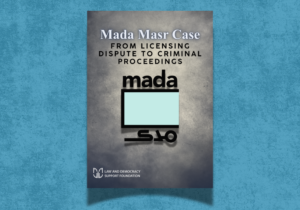
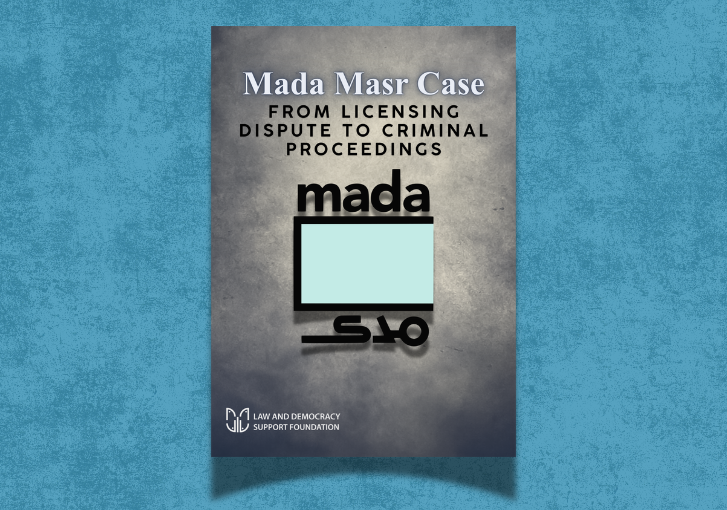
Law and Democracy Support Foundation (LDSF) has released a new report titled “ Mada Masr Case: From Licensing Dispute to Criminal Prosecution,” shedding light on the legal and procedural trajectory of the case against the independent news outlet Mada Masrand its Editor-in-Chief, journalist Lina Attalah. The report comes ahead of the first appeal hearing challenging the ruling that imposed a fine on Attalah and ordered the website’s closure, scheduled for Wednesday, 25 November 2026.
Tracing the roots of the crisis back to the enactment of Egypt’s Press and Media Regulation Law No. 180 of 2018, the report explains that Mada Masr submitted licensing applications and paid the required fees in 2018, and renewed its efforts in 2020 and 2023. However, the outlet never received formal notification from the Supreme Council for Media Regulation regarding any rejection of its application or requests for additional documentation, as required under the law’s executive regulations.
The report notes that successive criminal prosecutions against the outlet on charges of “operating a website without a license” intensified only after it published investigative reports and coverage of sensitive public-interest issues. According to the report, the authorities have used administrative obstruction as a basis for criminal prosecution and restrictions on independent journalism.
The report outlines the rapid timeline of Case No. 11743 of 2026 (New Cairo Misdemeanors Court). Attalah was summoned for questioning before the Supreme State Security Prosecution on 19 October, referred to trial on 22 October, and sentenced on 27 October, all within just eight days, culminating in a judgment imposing a fine of EGP 3 million, the closure of the website, and the confiscation of its equipment.
LDSF documented a number of procedural and constitutional violations that marred the proceedings, most notably:
1. Violation of the Right to Defense
The court refused to grant the retained defense team, comprising eight lawyers, an adjournment to review the case file and submit licensing-related documents. Instead, the court appointed another lawyer despite objections from both the defendant and her legal team, while failing to record those objections in the official court minutes.
2. Violation of the Right to a Public Trial
The courtroom was cleared, and journalists, supporters, and diplomatic representatives were prevented from attending the hearing without any formal legal decision ordering a closed session.
3. Post-Verdict Developments
Attalah was detained for approximately seven hours following the hearing. During that period, a previously undisclosed in absentia judgment issued in 2024 (Case No. 3219 of 2024) surfaced, sentencing her to one year’s imprisonment and a fine of EGP 2 million without her prior notification. The report also highlights discrepancies between two versions of a statement issued by the Supreme Judicial Council regarding whether the defense had been granted access to the case file. Meanwhile, the defense reiterated its intention to pursue the appeal and rejected any suggestion that it had waived its right to challenge the ruling.
In its legal analysis, LDSF argues that the penalties of closure and confiscation prescribed under Article 105 of the Press and Media Regulation Law directly contradict Article 71 of the Egyptian Constitution, which prohibits the confiscation, suspension, or closure of media outlets. The report further maintains that such sanctions undermine the principles of individual criminal responsibility and the presumption of innocence.
LDSF concludes with five key recommendations directed to the legislative, executive, and judicial authorities:
- Amend the relevant legal provisions to replace the system of prior licensing for establishing and operating news websites with a notification-based system, and abolish any criminal penalties associated with licensing requirements.
- Require competent authorities to adopt clear procedures for receiving notifications and formally informing media institutions of any missing documents or requirements without disrupting their operations.
- Review penalties imposed on media institutions and repeal the sanctions of closure and confiscation, as they infringe upon the public’s right to access information.
- Ensure full adherence to fair trial guarantees, including timely access by defense counsel to case files, the preservation of public hearings, and the protection of the right to appeal.
- Quash the rulings against Lina Attalah, including the fines imposed on her, the orders closing Mada Masr and confiscating its equipment, and enable the outlet to obtain the necessary authorization and carry out its journalistic work freely and without undue interference.
Read And Download the full Report