
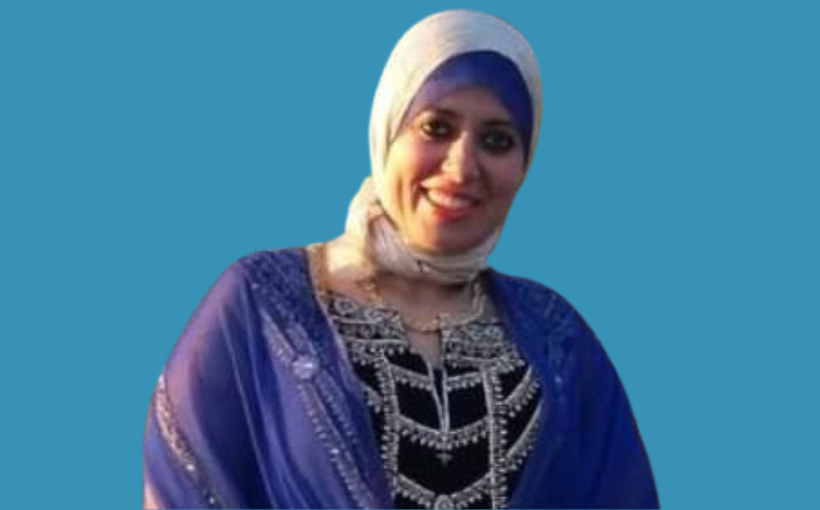
Law and Democracy Support Foundation (LDSF) condemns the Egyptian authorities’ ongoing targeting of family members of Egyptian-British opposition activist Mona El-Shazly, who has lived in the United Kingdom for more than two decades. The measures appear to be in retaliation for views she has expressed on social media platforms, constituting a serious example of Proxy Punishment and transnational repression employed by the Egyptian authorities to silence critical and dissenting voices abroad.

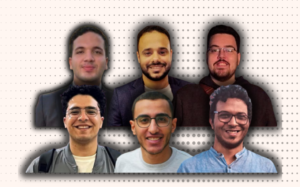
Within a period of just three months, between May and August 2026, five of Mona El-Shazly’s relatives became victims of arrest or enforced disappearance. Egyptian authorities are currently holding her brothers, Hassan El-Shazly and Eid El-Shazly, as well as her sisters, Iman El-Shazly and Shaimaa El-Shazly, in pretrial detention pending investigations conducted by the Supreme State Security Prosecution. Meanwhile, her cousin, Saber Mohamed Eid Hassan El-Shazly, has remained forcibly disappeared since 19 May 2026.
These actions constitute a grave violation of fundamental rights and freedoms and are incompatible with both the Egyptian Constitution and Egypt’s international human rights obligations under the International Covenant on Civil and Political Rights (ICCPR), particularly Articles 9 and 19, which guarantee the rights to liberty and security of person and to freedom of opinion and expression. The apparent targeting of family members solely because of their relationship to a government critic underscores a troubling pattern of reprisals that extends beyond Egypt’s borders and seeks to deter legitimate and peaceful dissent.

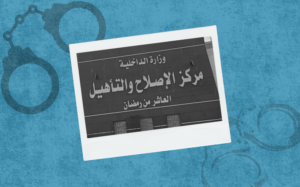
The crackdown began in the early hours of 19 May 2026, when security forces rearrested Hassan El-Shazly and Eid El-Shazly following a raid on the family home in Alexandria carried out with excessive force. According to available information, security personnel assaulted the brothers’ elderly mother and the building’s caretaker during the operation. The two men were subsequently subjected to enforced disappearance for five days before being brought before the Supreme State Security Prosecution, which charged them with terrorism-related offenses in Case No. 4489 of 2026 (Supreme State Security). They remain in pretrial detention, which continues to be renewed on a routine basis.
At the same time, their cousin, Saber Mohamed Eid Hassan El-Shazly, was arrested during the same security operation on 19 May 2026 and has remained forcibly disappeared ever since. To date, the Egyptian authorities have failed to disclose his whereabouts or legal status, while denying his family and legal representatives any contact with him.
This is not the first time that Hassan and Eid El-Shazly have been targeted by the authorities. In August 2020, both men were arrested by security forces and subjected to weeks of enforced disappearance before appearing before the Supreme State Security Prosecution in connection with Case No. 855 of 2020. They remained in prolonged pretrial detention for nearly three years before being released in March 2023, raising serious concerns about the recurring use of arbitrary detention and reprisals against the family.
In mid-August 2026, the crackdown expanded to include two additional sisters of Mona El-Shazly. On 17 August 2026, Egyptian security forces arrested Iman El-Shazly and brought her before the Supreme State Security Prosecution the following day. Prosecutors accused her of promoting the ideas of a terrorist organization through social media and spreading false news. She was subsequently ordered into 15 days of pretrial detention pending investigation.
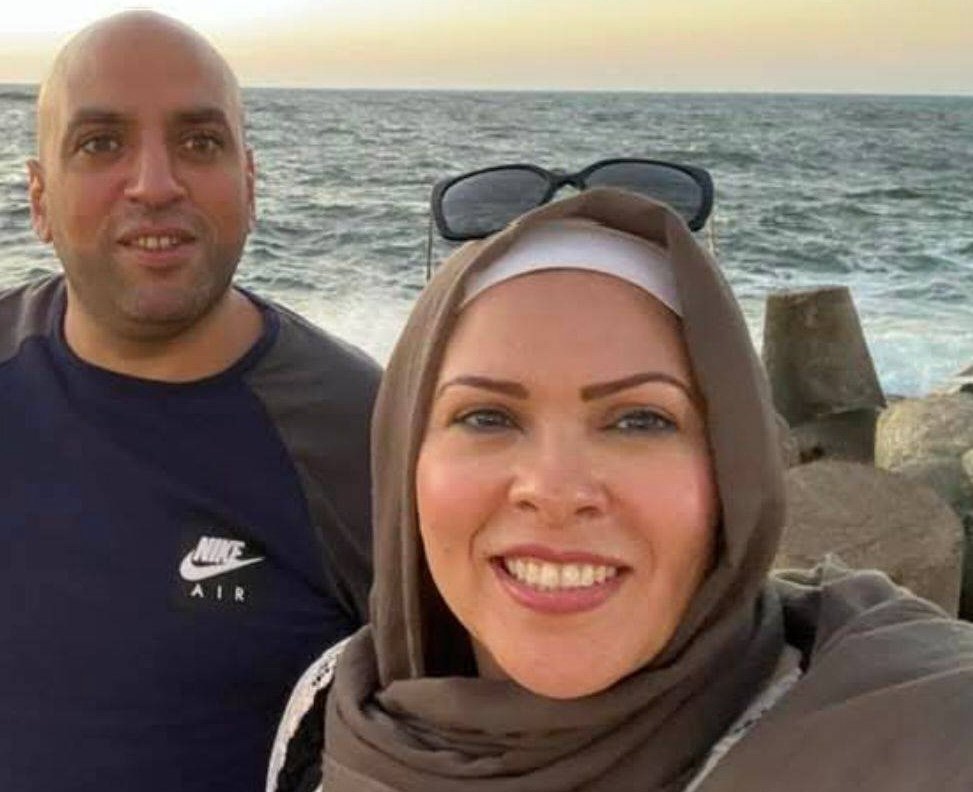
On 18 August 2026, security forces arrested her sister, Shaimaa El-Shazly, from her home in Alexandria. She was held incommunicado at an undisclosed location and denied access to both her family and legal counsel. The following day, 19 August 2026, she was brought before the Supreme State Security Prosecution, which also ordered her detention for 15 days pending investigation.
The pattern of arrests, enforced disappearances, incommunicado detention, and repeated targeting of multiple members of the same family strongly suggests a policy of retaliation against relatives of a government critic rather than legitimate law enforcement measures. Such practices constitute serious violations of international human rights law and exemplify the use of Proxy Punishment and transnational repression to intimidate and silence dissenting voices beyond Egypt’s borders.
Prior to the arrest of Iman El-Shazly, security agents reportedly visited her residence and instructed her to convey a message to her sister, Mona El-Shazly, demanding that she cease criticizing the Egyptian authorities and stop publishing opposition content across her social media platforms. Mona El-Shazly manages a number of social media pages and channels through which she regularly shares her views and commentary on political, social, and economic developments in Egypt. These platforms have been subjected to repeated disruptions and closures, affecting at least eight Facebook pages, seven TikTok accounts, four accounts on X (formerly Twitter), and five YouTube channels. Nevertheless, these measures have not prevented her from creating new platforms and continuing to exercise her right to freedom of expression and public engagement.

It is notable that Iman El-Shazly is a dual Egyptian-British national residing in the United Kingdom. She had returned to Egypt to care for her elderly mother and to follow up on the situation of her detained siblings before becoming a target herself. Her arrest illustrates the Egyptian authorities’ apparent disregard for the legal and constitutional rights of citizens and underscores a pattern of collective reprisals aimed at silencing government critics abroad through pressure imposed on their family members.
This case further demonstrates the multi-layered and transnational nature of the reprisals faced by Mona El-Shazly and her family. While Egyptian authorities have targeted her relatives inside Egypt, the repercussions have also extended to the United Kingdom, where Mona El-Shazly herself has reportedly been subjected to a series of troubling incidents that raise concerns about her safety and security.
This case illustrates the simultaneous use of multiple forms of repression and retaliation. While the Egyptian authorities have targeted members of Mona El-Shazly’s family inside Egypt, the impact of these measures has also extended to the United Kingdom, where Mona El-Shazly herself has been exposed to a series of troubling incidents that raise concerns about her safety and personal security. In September 2020, her vehicle was stolen from outside her residence and was later recovered by the Metropolitan Police in April 2021 in a severely damaged condition. She has also reported a number of incidents that led her to believe that she may have been subjected to surveillance or monitoring. In support of these concerns, she documented through video recordings the appearance of unidentified moving illuminated objects, resembling drones, in the vicinity of her residence in the United Kingdom on several occasions over different periods of time.
LDSF has additionally reviewed voice messages and direct threats sent to Mona El-Shazly through multiple social media accounts displaying the logo of the Egyptian Ministry of Interior. These communications contained explicit threats, including statements such as “We will get you,” “We will drag you through the streets,” “We will flog you,” and “People like you deserve to be executed.” Such messages cannot be dismissed as mere online abuse or harassment. Rather, they amount to direct threats of violence and retaliation that appear intended to intimidate, instill fear, and undermine her sense of personal security in response to her peaceful activism and political views.
Taken together, the targeting of family members, the reported threats, and the alleged acts of intimidation directed at Mona El-Shazly point to a broader pattern of transnational repression, whereby measures taken against relatives and critics are used to deter, punish, and silence individuals exercising their fundamental rights to freedom of expression and political opinion beyond Egypt’s borders.
The case of Mona El-Shazly and her family is the latest example in a growing pattern of reprisals against relatives of Egyptian opposition figures, journalists, and human rights defenders living abroad. This pattern has intensified significantly in recent months. In August 2026, Egyptian authorities arrested Ahmed Al-Amin, the brother of UK-based Egyptian political activist Amr Abdelhady. During the same month, Egyptian journalist Abu Bakr Khallaf, who has lived outside Egypt for more than 13 years, publicly reported that his brother had been arrested and detained in apparent retaliation for his journalistic activities abroad.
These incidents build upon a long record of similar cases involving the relatives of exiled critics and human rights advocates. Such cases have included the detention of the father of journalist Ahmed Gamal Ziada, raids on the homes of relatives of human rights defender Mohamed Soltan and the arrest of several family members, the detention of the father of researcher and podcast host Seif El-Islam Eid, and the targeting of activist Islam Khalil in an apparent effort to pressure his brother, human rights defender Nour Khalil. Taken together, these cases point to a deeply concerning pattern whereby family members are subjected to punitive measures because of the peaceful activities, opinions, or advocacy work of their relatives abroad.
Karim Abdelrady, Executive Director of the Law and Democracy Support Foundation (LDSF), stated: “The absence of adequate international responses, and the failure of the Egyptian authorities to bear the consequences of their actions or for their human rights record to affect their international relations, has encouraged them to further expand their practice of transnational repression. The authorities are attempting to suppress freedom of expression abroad through security methods similar to those they employ domestically to close civic space, pursue critics, and punish dissenting voices. They appear to view the spaces available to opposition figures abroad as a threat to their monopoly over public narratives and control of channels of opinion, while continuing to believe that security-based approaches are the only guarantee of their survival and the means by which they can address their internal challenges. This comes amid the absence of any political will to undertake democratic reforms or to pursue dialogue and political solutions to address the deteriorating situation and the criticism directed at them.”
He added: “Treating families and relatives as ‘hostages’ in order to pressure their loved ones is a longstanding practice that Egypt’s Ministry of Interior has historically used against criminal suspects to compel them to surrender or to extract confessions. However, the authorities have adapted this practice and now employ it against political opponents and individuals expressing critical views abroad in order to silence them, in what is internationally known as proxy punishment*. This practice is no longer confined to the Ministry of Interior; it has expanded to involve the Supreme State Security Prosecution and certain judicial circuits handling terrorism-related cases through the use of pretrial detention as a tool to punish individuals for their views and to punish their relatives. This constitutes a blatant violation of the principles of individual criminal responsibility and personal culpability, as well as the rights and freedoms guaranteed under Egypt’s Constitution and its international obligations, and poses a serious threat to the rule of law itself.”
The United Kingdom has formally recognized that acts such as threats of violence, surveillance, harassment, digital targeting, and pressure directed at individuals residing within its territory may constitute transnational repression when they are orchestrated, directed, or encouraged by a foreign state. Likewise, the member states of the G7, of which the United Kingdom is a member, have acknowledged that such practices amount to a form of foreign interference targeting human rights defenders, journalists, political dissidents, and diaspora communities, including through threats and reprisals against their family members.
Against this backdrop, the experiences reported by Mona El-Shazly, including direct threats, digital targeting, and incidents suggesting surveillance or monitoring, coupled with the simultaneous targeting of multiple members of her family inside Egypt, warrant serious scrutiny by the British authorities under existing frameworks addressing transnational repression and foreign interference. LDSF urges the relevant authorities to investigate these incidents thoroughly and to ensure that Mona El‑Shazly is able to exercise her rights and freedoms without fear, intimidation, or retaliation, in accordance with the United Kingdom’s legal and policy commitments, including the provisions of the National Security Act 2023.
LDSF Calls on:
First: The Egyptian Authorities
- Immediately and unconditionally release Hassan Saber El-Shazly, Eid Saber El-Shazly, Iman Saber Eid Hassan El-Shazly, Shaimaa Saber Eid Hassan El-Shazly, and all individuals arbitrarily detained in connection with this case, and drop all charges against them.
- Immediately disclose the fate and whereabouts of Saber Mohamed Eid Hassan El-Shazly, allow him prompt access to his family and legal counsel, ensure his protection from torture and other ill-treatment, and release him without delay.
- End all forms of harassment, retaliation, and targeting directed at Mona El-Shazly because of her peaceful exercise of her right to freedom of opinion and expression, including through the targeting of her relatives or the misuse of security and judicial measures to pressure her over her political views and activities.
- Cease the targeting of family members of opposition figures, journalists, and human rights defenders living abroad, respect the principle of individual criminal responsibility, and refrain from using family ties as a tool of pressure or retaliation.
- Immediately halt all forms of transnational repression directed against Egyptian activists, dissidents, and critics abroad, including direct and indirect threats, digital targeting, surveillance, intimidation, and the targeting of family members as a means of coercion or punishment.
- Conduct an independent, impartial, and transparent investigation into the enforced disappearances and other violations associated with the arrests and detentions documented in this statement, and hold all those responsible accountable.
Second: The United Kingdom Authorities
- Undertake urgent diplomatic intervention and provide full consular protection to British citizen Iman El-Shazly, who is currently detained in Egypt, while calling for her immediate release.
- Ensure adequate protection for Mona El-Shazly and safeguard her ability to exercise her rights and freedoms without intimidation or retaliation, including through measures designed to protect individuals in the UK from threats linked to their legitimate political or human rights activities.
- Open a prompt and credible investigation into the threats of violence, digital targeting, and alleged surveillance or monitoring incidents reported by Mona El-Shazly in the United Kingdom, assessing these incidents within the framework of transnational repression and potential foreign interference, and take all necessary measures to ensure her protection.
- Fulfil the United Kingdom’s stated commitments to counter transnational repression and foreign interference, including through the implementation of relevant national policies, international commitments, and available legal mechanisms, including those provided under the National Security Act 2023.
Note: Proxy Punishment (also referred to internationally as reprisals by proxy) occurs when state authorities extend their targeting beyond the individual engaged in political, human rights, or advocacy activities to include members of that person’s family, with the aim of exerting pressure, exacting punishment, or deterring further activism. Such practices violate the principle of individual criminal responsibility, which prohibits holding any person accountable for the actions, opinions, or conduct of another.


1 thought on “Egypt: Targeting UK-based opposition figure Mona El-Shazly and five members of her family over her peaceful expression is a stark example of collective punishment”