The human rights organisations signatory to this statement closely followed the review of the combined periodic report of the Arab Republic of Egypt before the African Committee of Experts on the Rights and Welfare of the Child (ACERWC), held on 15 October 2026 during the Committee’s 48th Ordinary Session in Maseru, Kingdom of Lesotho.
This review is of particular significance, representing a long-awaited opportunity to assess Egypt’s compliance with its obligations under the African Charter on the Rights and Welfare of the Child, following a prolonged absence from the periodic reporting process before this African mechanism. It also constitutes a test of the Egyptian authorities’ willingness to engage in a substantive human rights dialogue that goes beyond presenting legislation, strategies, and governmental achievements to addressing the actual violations and challenges faced by children and ensuring that concrete measures are taken to remedy them.
The signatory organisations welcome the convening of this review and the questions and observations raised by members of the African Committee, which addressed a broad range of fundamental issues concerning the protection of children, including criminal justice safeguards, pretrial detention, discrimination in access to official documentation, the situation of refugee and asylum-seeking children, violence against children, child marriage, female genital mutilation (FGM), child labour, and the independence of national institutions responsible for their protection.
The organisations note that the discussions once again revealed a concerning gap between the legislative and institutional framework presented by the Egyptian government delegation and the need for independent, verifiable data demonstrating the actual effectiveness of these laws and policies in protecting children’s rights in practice.
The Egyptian delegation’s interventions focused extensively on reviewing national laws, strategies, and government programmes, while numerous questions raised by Committee members called for practical clarifications and detailed statistics concerning violations, safeguards, oversight mechanisms, and access to effective remedies.
In this context, the organisations express concern over the continued pattern characterising the Egyptian government’s engagement with regional and international human rights review mechanisms, which has largely been marked by the defence of existing policies and the promotion of official achievements, rather than adequate acknowledgment of documented violations or substantive engagement with evidence and information submitted by independent civil society organisations.
The organisations emphasise that such an approach neither facilitates constructive dialogue with human rights mechanisms nor fulfils the fundamental purpose of periodic reporting reviews, which is to identify shortcomings and challenges and adopt the measures necessary to comply with the State’s legal obligations.
The situation of children within the criminal justice system emerged as one of the most prominent issues raised during the review. Members of the African Committee requested clarification regarding safeguards ensuring that all children under the age of 18 fall within the jurisdiction of specialised juvenile courts, including in cases involving security-related proceedings. They also raised questions concerning the duration of pretrial detention, mechanisms for judicial oversight of detention renewals, and guarantees ensuring the separation of children from adults at all stages of arrest, investigation, and detention.
The organisations consider that these questions address fundamental concerns previously raised by independent human rights organisations, particularly the detention of children in connection with security-related cases, allegations of torture, ill-treatment and enforced disappearance, and the denial of fundamental fair trial guarantees.
The organisations stress that protecting children from torture and arbitrary detention cannot be achieved merely by referring to the existence of specialised courts or legal provisions regulating juvenile justice. Rather, it requires ensuring the effective implementation of these provisions, conducting independent investigations into allegations of violations, and making available information concerning the number of detained children, their places and conditions of detention, and the duration of their deprivation of liberty.
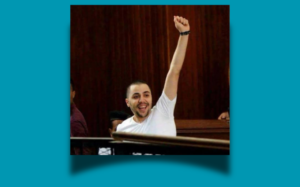
This issue is particularly significant in light of the African Committee’s decision in April 2026 to declare admissible a complaint jointly submitted by the Committee for Justice (CFJ), the Sinai Foundation for Human Rights, and the Robert F. Kennedy Human Rights organisation concerning the alleged arbitrary detention and torture of Egyptian child Bahaa El-Din Fathy Mohamed Maher Ismail Khalil. The complaint has proceeded to the merits stage, underscoring the importance of ensuring access to regional accountability mechanisms for children who are victims of human rights violations.
The organisations also welcome the African Committee’s attention to the issue of access to civil documentation for children belonging to religious minorities, particularly children from Bahá’í families, who may face obstacles arising from the lack of legal recognition of their parents’ marriages or difficulties in regularising their civil status.
Committee members requested clarification regarding the safeguards ensuring that these children can obtain birth certificates, national identification numbers, and the documentation necessary to access education and healthcare, without their parents’ legal or religious status becoming grounds for depriving them of their rights.
The organisations emphasise that the rights to legal identity, birth registration, and non-discrimination are inherent rights of every child. Their enjoyment must not be made conditional upon official recognition of the family’s religious beliefs or the completion of administrative procedures that parents may be unable to fulfil. Accordingly, the Egyptian authorities must address existing legal and administrative barriers and ensure that all children enjoy their rights equally, in accordance with Articles 3 and 6 of the African Charter.
Regarding the situation of refugee, asylum-seeking, and migrant children, the Committee raised important questions concerning equal access to education, essential services, and civil registration, particularly for children of different nationalities.
Although the Egyptian delegation reaffirmed the State’s commitment to hosting refugees and providing them with access to essential services, the organisations stress the need to move beyond general assurances towards practical and measurable guarantees. These should include removing barriers related to nationality, language, and legal documentation, and ensuring that all children on Egyptian territory have access to protection, education, and healthcare without discrimination based on their own legal status or that of their families.
The organisations also followed with interest the questions concerning child marriage and female genital mutilation. They note that government representatives acknowledged during the discussions the persistence of certain harmful practices, including the medicalisation of FGM and the existence of loopholes allowing circumvention of the legal minimum age for marriage through unregistered marriages that are subsequently officially registered.
The organisations believe that this acknowledgment should serve as a starting point for more substantive legislative and institutional reforms, including addressing legal loopholes, strengthening oversight and accountability, establishing safe reporting and protection mechanisms, and implementing the community-based and awareness-raising measures necessary to eliminate these practices.
Furthermore, discussions concerning the funding and independence of national institutions responsible for child protection, as well as the operating environment for civil society organisations, raised fundamental questions regarding the ability of the national child protection system to fulfil its mandate independently and effectively.
Committee members requested clarification concerning sustainable funding for the National Council for Childhood and Motherhood, its degree of independence, and its capacity to monitor government policies. They also sought information regarding safeguards for the registration of civil society organisations working on children’s rights and their ability to obtain the funding necessary to carry out their activities.
The organisations emphasise that the existence of a legal framework regulating civil society activities, or an increase in the number of registered associations, does not in itself constitute sufficient evidence of a free and safe environment for independent human rights organisations. The genuine measure is whether these organisations can operate, monitor, document violations, and engage with regional and international mechanisms without arbitrary restrictions, interference, or risks of reprisals.
The organisations further stress that an effective child rights protection system requires the meaningful participation of independent civil society as a partner in monitoring, accountability, and policy development, rather than merely as an implementing actor for government programmes.
In light of the proceedings of the review session, the signatory organisations call upon the Egyptian government to undertake a serious and comprehensive reassessment of its approach to human rights issues and to abandon the policy of denial and minimisation of documented violations that has repeatedly characterised its engagement with several African and international review mechanisms.
The organisations emphasise that genuine cooperation with these mechanisms should not be measured by the size of participating official delegations or the number of laws and strategies presented, but rather by the State’s willingness to acknowledge existing problems, provide accurate and verifiable information, engage openly with independent criticism, and take concrete measures to address violations and hold those responsible accountable.
The organisations also call upon the Egyptian authorities to submit detailed written responses to questions that were not answered during the session, publish relevant data and statistics, and establish a clear, publicly available follow-up plan for implementing the concluding observations and recommendations to be issued by the African Committee, with the meaningful participation of independent civil society organisations and national bodies responsible for child protection.
The organisations further urge the African Committee to give particular attention in its concluding observations to safeguards protecting children against arbitrary detention, torture, and enforced disappearance; protection against religious discrimination; the civil rights of refugee and stateless children, as well as those at risk of statelessness; and the removal of barriers preventing their access to justice and essential services.
The organisations reaffirm that the review of Egypt’s record before the African Committee must not end with the conclusion of the dialogue with the government delegation. Rather, it should mark the beginning of an independent and transparent follow-up process that places children’s rights and their best interests at the centre of public policies.
What is required of the Egyptian government is not to present a more positive image of its human rights record before international and African mechanisms, but to take concrete steps to genuinely improve that record and ensure that every child enjoys protection, dignity, and justice without discrimination.
Signatories
- Committee for Justice (CFJ)
- Sinai Foundation for Human Rights (SFHR)
- Law and Democracy Support Foundation (LDSF)
- Egyptian Front for Human Rights (EFHR)
- HuMENA for Human Rights and Civic Engagement