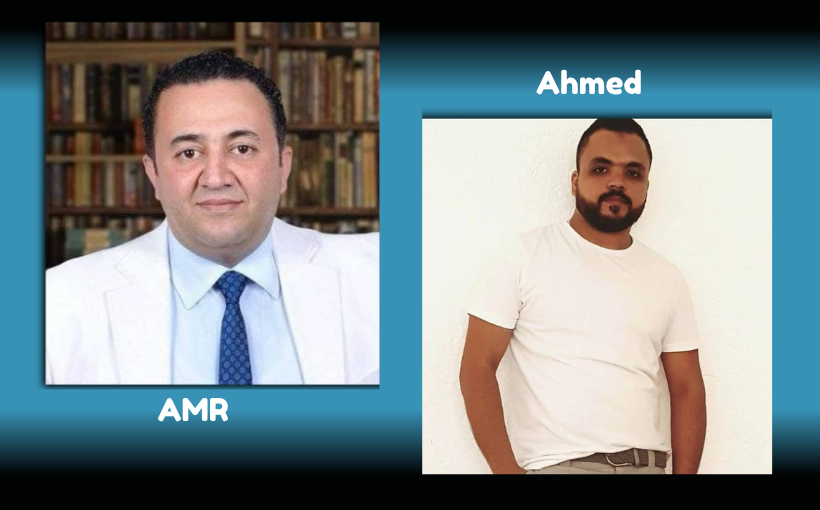
Law and Democracy Support Foundation (LDSF) condemns the arrest of Egyptian citizen Ahmed Samir Mohamed El-Amin, half-brother of UK-based Egyptian politician Amr Abdel Hady. The Foundation considers his detention—given the circumstances surrounding his arrest and the interrogation of his family members—to fall within a recurring pattern of targeting the relatives of Egyptian dissidents living abroad, using them as leverage for political pressure and retaliation.
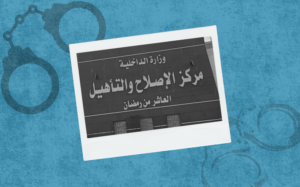
At approximately 2:00 AM on August 16, 2026, a force from the National Security Agency raided the home of Ahmed and Amr’s mother in search of her son Ahmed, who was not with her at the time. The force then proceeded to his residence, stormed the apartment, and took him away in front of his wife and three children to a security detention facility. Hours after his arrest, Ahmed’s mother was subjected to an interrogation lasting nearly five hours, at the end of which she received a direct threat from security personnel, who told her: “Tell your son Amr to calm down a bit.”
On August 17, 2026, Ahmed appeared as a defendant before the Supreme State Security Prosecution (SSSP), which ordered his detention for 15 days pending investigation in Case No. 6252 of 2026 (SSSP). He was charged with joining a terrorist organization and committing a crime of terrorism financing.
Ahmed works as an employee at the Ministry of Justice and has no known history of political opposition activity. In fact, his political stance was publicly distinct from that of his brother, Amr Abdel Hady. Nevertheless, his arrest cannot be viewed in isolation from a prolonged series of measures that have targeted Amr Abdel Hady’s family over many years.
Since 2016, Amr Abdel Hady and his family members have faced continuous targeting and restrictions linked to his political activities outside Egypt. He has been repeatedly denied passport renewals through the Egyptian Embassy in Qatar. Additionally, his mother has been subjected to travel bans, interrogations, and the confiscation of her passports on multiple occasions as a measure of punishment for his opinions.
In 2021, he was detained in Qatar for 12 days. These practices also extended to restricting his digital presence, leading to the shutdown of his private social media accounts in July 2026—including his WhatsApp account and public Facebook page—culminating in the recent raid on his mother’s and brother’s homes and his brother’s arrest.
The case of Amr and his family falls within a recurring pattern of targeting the relatives of Egyptian dissidents, journalists, and human rights defenders living abroad as part of a broader practice of transnational repression that the Egyptian authorities have become known for using to silence critical voices engaged in legitimate activities from outside the country. Over recent years, similar incidents have occurred, including the detention of journalist Ahmed Gamal Ziada’s father, raids on the homes of relatives of human rights defender Mohamed Soltan and the arrest of several of them, and the detention of the father of researcher and podcaster Seif El-Islam Eid over his son’s activity in exile, as well as the targeting of activist Islam Khalil to pressure his brother, human rights defender Noor Khalil.
During the same period, the case of Iman Saber Eid Hassan El-Shazly—sister of UK-based Egyptian activist Mona El-Shazly—also emerged. She was arrested from her family home in Alexandria on August 17, 2026, and subsequently appeared before the Supreme State Security Prosecution (SSSP), which ordered her detention for 15 days pending investigation in Case No. 4489 of 2026 (SSSP). She was charged with “using a social media account to promote the ideas of a terrorist group” and “spreading false news and statements.” This comes amid the continued detention of her brothers, Hassan and Eid El-Shazly, who have been held since May 2026 under the same case and on the same charges.
In recent years, Egypt has emerged as one of the countries with documented, multi-faceted patterns of transnational repression. These include harassing relatives of dissidents, arbitrary travel bans, denial of official documents and consular services, issuing politically motivated rulings and cases against dissidents in exile, as well as smear campaigns, incitement, digital restrictions, and direct and indirect intimidation of critical voices abroad. These practices have extended to leveraging state institutions and tools—including security, judicial, and diplomatic agencies—in an attempt to restrict the public activity of Egyptians abroad and deter them from exercising their right to express themselves and make their voices heard.
These violations are not an isolated phenomenon from what is happening inside Egypt; rather, they are a direct extension of policies that have closed public space and criminalized independent political and human rights work domestically. The tools used against dissidents inside the country—politically motivated prosecutions, arbitrary detention, and security intimidation—are reproduced beyond borders in various forms targeting exiles through their families and relatives. This makes targeting families at home part of a broader strategy aimed at shifting the cost of opposition from the individual to their family and social circle. These practices send a clear message to Egyptian diaspora communities that the reach of state security is long, that geographic distance does not shield them from retaliation, and that expressing opinions or engaging in public work from abroad may be met with the targeting of relatives inside the country. This approach inevitably fosters a climate of fear and self-censorship among exiles, undermining the ability of Egyptian civil society abroad to operate freely and independently.
The Law and Democracy Support Foundation demands that the Egyptian authorities:
- Immediately release Ahmed Samir Mohamed El-Amin and the siblings of Egyptian activist Mona El-Shazly, and drop all charges brought against them.
- Cease using the families of dissidents, activists, and human rights defenders as hostages to silence Egyptians abroad and punish them for their views.
- Halt the practice of transnational repression employed by Egypt to muzzle Egyptian voices abroad.
- Fulfill Egypt’s international obligations, respect public freedoms, and put an end to the policy of closing the public space.